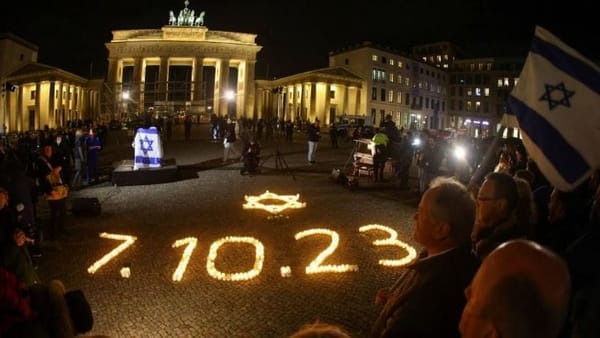
Years after October 7th, the wounds remain—but so do the questions. The attack is still leveraged to justify power, policy, and war. Tragedy unified a nation, but it also shielded leaders from accountability. Who benefits when crisis never ends?
On October 7th, 2023, the world watched in horror as Hamas militants launched a brutal and coordinated attack on Israel. The event shook the nation to its core, shattered a sense of security long believed unshakable, and set off a war whose consequences are still unfolding. The attack was real, the suffering undeniable, and the tragedy immense. Yet even as the facts of the day remain clear, the narrative around how it unfolded continues to spark deep and troubling questions.
How Could This Happen?
Israel is widely regarded as one of the most advanced intelligence powers in the world. Mossad, Shin Bet, and Unit 8200 are synonymous with precision, vigilance, and constant surveillance. The Gaza border is among the most heavily fortified in existence, bristling with cameras, drones, motion sensors, and watchtowers.
So, how could hundreds of militants breach that barrier in multiple places and remain unchallenged for hours? How could thousands of rockets be launched without significant advance warning? Was this a catastrophic intelligence failure, or does it point to something else?
Survivors from border communities have shared chilling accounts: phone calls for help that went unanswered, hours passing before soldiers arrived, and towns left defenseless. Given the proximity of military bases, why was the response so slow? Was the scale of the attack so overwhelming, or were early warnings dismissed?
Political Context
The timing of the attack raises further questions. In the months before October 7th, Israel was consumed by internal division. Mass protests against Prime Minister Benjamin Netanyahu’s judicial reform had paralyzed the nation. His approval ratings were falling. Some critics even suggested his political career was nearing an end.
When leaders cling to power, truth often becomes the first casualty.
And then came October 7th. Suddenly, the protests evaporated, the nation unified, and Netanyahu’s role as wartime leader was cemented. Could this tragedy have been used—intentionally or otherwise—to shift political winds? Was there a failure of leadership, or a failure too convenient to ignore?
Cui Bono — Who Benefits?
The Latin phrase “cui bono” asks: who benefits? For Hamas, the attack was a symbolic strike, but one that has brought devastation upon Gaza. For Israel’s leadership, the attack has provided justification for unprecedented military action and restored political authority to a government on shaky ground.
Guardians ask the questions others fear: Who benefits? Who pays? And why?
Does that mean the attack was allowed to happen? We cannot know. But it does force us to consider whether the failures of October 7th were simply mistakes—or whether they reveal something far more troubling about the way power is preserved in times of crisis.
The Guardian’s Lens
It is not the role of free people to accept official stories without question. Truth-seeking begins where narratives leave gaps. October 7th may stand as a day of tragedy for Israel, but also as a warning to the world: when leaders are desperate to maintain power, the price is often paid by ordinary citizens.
We, as Guardians, must recognize the pattern: moments of chaos often serve as tools for the powerful to tighten their grip. Whether in Israel, America, or anywhere else, the questions we dare to ask may be the only shield we have against deception.
Our lens is clear: tragedies must not only be mourned—they must be interrogated. For the sake of justice, for the sake of truth, and for the sake of those whose lives were lost, we cannot stop asking why.