There is a quiet problem underneath a lot of Christian conversation right now: we are speaking with conviction, but we are not always speaking with definition.
We say things like “support the Jews,” “stand with Israel,” or “oppose antisemitism,” and we often mean well. But good intentions do not automatically produce clear thinking. When our terms are undefined, our loyalties can become misplaced, our theology can drift, and our public speech can get shallow fast.
The aim here is not to pick fights. It is to clean up language so we can act with integrity. In a world addicted to slogans, clarity is an act of resistance. More than that, clarity is a form of love.
A word that stays single: what “Christian” means
“Christian” is not a complicated label.
A Christian is someone who confesses Jesus Christ as Lord.
That confession is not a vibe. It is not a cultural heritage. It is not a political alignment. It is a declaration of allegiance and an expression of covenant identity: Jesus reigns, Jesus saves, Jesus defines the person who belongs to Him.
This is what makes Christianity unique among identity claims. It is not ethnic. It is not racial. It is not genetic. It is not national.
Christian identity does not begin with blood. It begins with belief.
It does not unify people by ancestry. It unifies people by confession.
It answers a single question that cannot be dodged:
Who is your Lord?
And Christians, if they are being honest, only have one answer:
Jesus Christ is King.
A word that multiplies: what “Jew” can mean
Now compare that simplicity to the way the word “Jew” is used.
In everyday conversation, “Jewish” is often treated as if it functions like “Christian,” meaning one unified identity with one stable definition. But in practice, “Jewish” is a layered term. Depending on context, it can mean different things, and those meanings can overlap without being identical.
That is where confusion enters. People argue, pledge loyalty, condemn, or defend without realizing that two speakers can use the same word while referring to entirely different categories.
In modern usage, “Jewish” commonly refers to some mixture of the following:
Sometimes it means religious identity, tied to Judaism and halakhic status. Sometimes it means ethnic or ancestral lineage, the sense of Jewishness as descent. Sometimes it means culture, including customs, holidays, food, and shared communal memory. Sometimes it means national or political identity, connected to the modern state of Israel and legal categories such as the Law of Return. Sometimes it is treated as a racial category, a historically loaded and morally corrupt framing that has been used to justify persecution. Sometimes “Jewish” is simply self-identification, what a person claims about themselves. Sometimes it is community recognition, whether a Jewish community accepts someone as Jewish. Sometimes it is discussed in terms of genetic population markers, often through modern testing. And sometimes it is used historically, referring to the people of Judea in particular eras.
These meanings can converge in one person. They can also diverge sharply. And when we pretend they are interchangeable, we create a fog where moral statements sound strong but mean little.
Where slogans become traps
This is why certain phrases can be sincere and still be irresponsible.
Take the sentence: “Christians must support the Jews.”
Support whom, exactly?
Support Jewish people as an ethnic community facing hatred? That is one thing.
Support Judaism as a religious system? That is another thing.
Support the modern state of Israel in every policy decision? That is another thing entirely.
Support a legal-national category that includes non-religious identities? Yet another.
If we do not define what we mean, “support” becomes a blank check. And blank checks are always attractive to the people who want control of someone else’s conscience.
This is not nitpicking. This is basic honesty. You cannot love your neighbor with vague language, because vague language eventually becomes a tool.
The real contrast we keep missing
Here is the clean contrast that helps the whole conversation settle into focus:
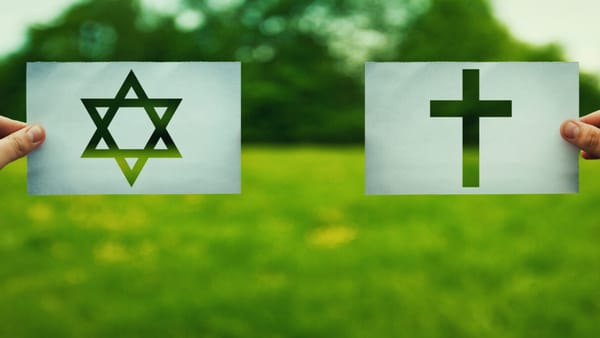
Christian is confession. Jewish is context-dependent.
Christianity is covenantal and confessional. It is anchored in the question of Lordship.
Jewishness may be tied to religion, peoplehood, culture, nationhood, history, or some combination of them.
That does not make Jewish identity illegitimate. It makes it complex. And complex realities demand careful speech.
When we treat “Jew” as if it functions like “Christian,” we end up smuggling assumptions into the conversation without noticing. That is where theological confusion starts. That is where political manipulation thrives. That is where emotional rhetoric replaces discernment.
Why this matters for Guardians
A Guardian is called to more than outrage and more than applause. A Guardian is called to discernment.
Undefined language produces predictable results:
It creates confused theology, where biblical categories are blurred and covenant language is misused.
It enables political manipulation, where moral pressure is applied without moral clarity.
It fuels emotional but imprecise rhetoric, where people feel righteous while being unable to explain what they mean.
That is not strength. That is vulnerability dressed up as conviction.
And the correction is not hostility. The correction is precision.
Precision is not hatred. Precision is respect.
If you care enough to speak, you should care enough to mean what you say.
A closing question worth sitting with
So here is the challenge, stated plainly and without theatrics:
How can we faithfully speak of “supporting the Jews” or “Jewishness” if we are unwilling to first define what we mean, especially when our own identity as Christians is grounded in one clear confession: Jesus Christ is King?
Words shape loyalties.
Loyalties shape actions.
Actions shape lives.
Clarity is not optional. It is part of what it means to walk in truth.