Pete Hegseth Confronts America’s Recruitment Crisis and Calls the Military Back to Readiness
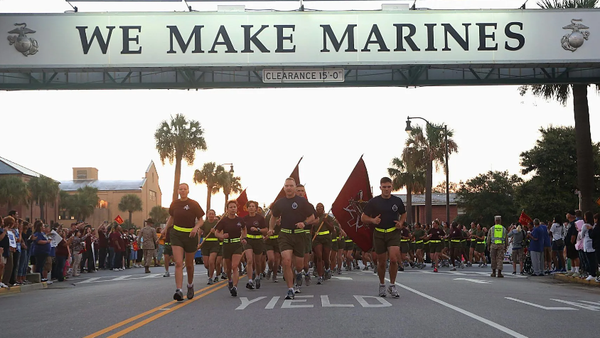
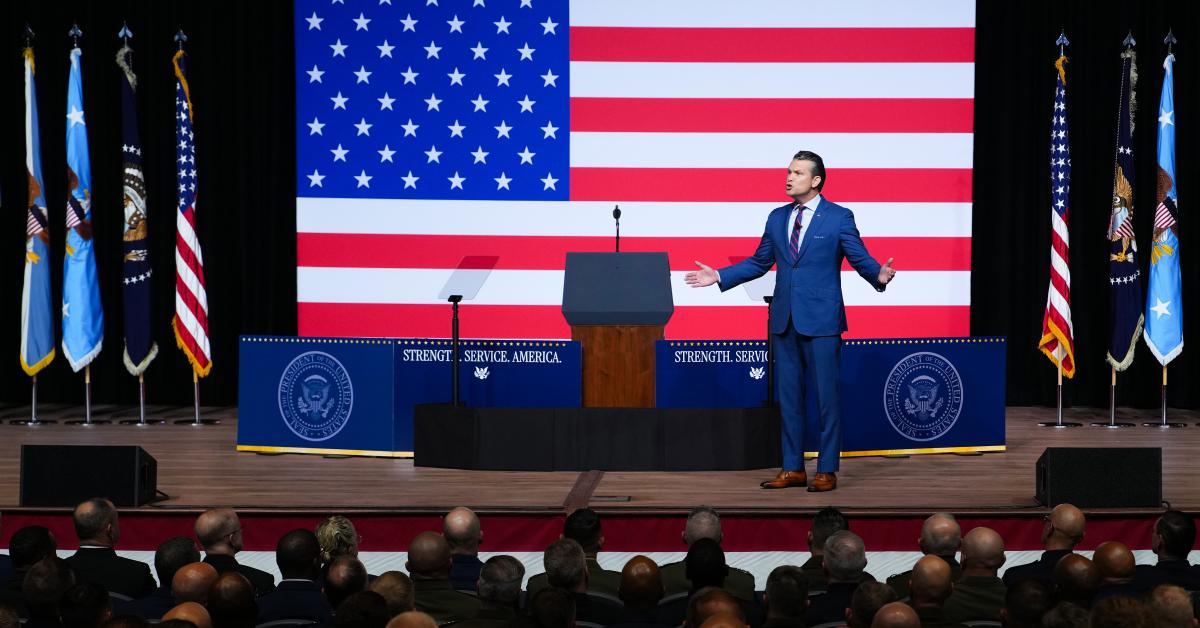
America’s military faces its worst recruitment collapse in 50 years. On September 30, Secretary of War Pete Hegseth told the nation’s top brass: lower standards end now — warriors must rise.
Standing before the Joint Chiefs and senior commanders at the Pentagon, Pete Hegseth did not mince words. “If you cannot meet the standard, you cannot stay in the ranks,” he told them. His message was as much an indictment of past failures as it was a roadmap for renewal. The armed forces, he argued, have been weakened not by lack of resources but by the steady abandonment of standards that once made them the envy of the world.
The timing of the speech was no accident. For two consecutive years, the U.S. military has missed its recruiting goals by historic margins. The Army fell short by more than 15,000 soldiers in 2023, the Navy and Air Force also missed their marks, and even the Marine Corps barely managed to meet its quota. In 2024 the situation worsened, with the Pentagon reporting the largest overall shortfall in 50 years. Analysts warn that if trends continue, the U.S. could face a shortfall of over 100,000 service members within the next five years.
The reasons are both cultural and physical. Pentagon studies show that more than 70% of young Americans are unfit for service due to obesity, drug use, or criminal history. At the same time, interest in military service has collapsed. Polling from Military Times found that trust in the military among young men — historically the strongest recruiting base — has fallen to record lows. For many, the armed forces no longer represent discipline, honor, and patriotism, but a politicized institution more focused on diversity quotas and social experiments than on preparing for war.
This perception has consequences. A force struggling to recruit is a force struggling to fight. In his speech, Hegseth connected the dots between sagging recruitment, lax standards, and America’s readiness in a world aflame. With wars raging in Ukraine and the Middle East, and China expanding in the Pacific, he reminded his audience that the U.S. cannot afford to field a hollow army. “Readiness,” he said, “is not optional. It is the reason we exist.”
The reforms he announced are sweeping. Fitness tests will be toughened, grooming and uniform standards tightened, and commanders held accountable for enforcing discipline in the ranks. Hegseth framed these measures not as cosmetic but as existential. “A fighting force that looks weak, trains weak, and tolerates weakness will be weak,” he said. “Our enemies watch more closely than our friends. And they must see warriors.”
He also rebuked the trend of lowering requirements to attract recruits. Over the past decade, entrance exams were watered down, physical standards relaxed, and even tattoos and grooming rules liberalized in the name of inclusion. Yet these changes failed to solve the crisis. “Lowering the bar does not bring in warriors,” Hegseth argued. “It only tells the next generation that excellence no longer matters.” Instead, he called for raising the bar to restore the military’s prestige: “Service must once again mean something so demanding, so honorable, that it calls forth the best of our young men and women.”
The speech resonated with many veterans and service members, who have long lamented the erosion of discipline. Critics, however, warned that higher standards could shrink the recruiting pool further. But as Hegseth made clear, numbers are not the ultimate measure — warriors are. Better a smaller, stronger force, he insisted, than a larger one that cannot fight and win.
In linking recruitment, standards, and readiness, Hegseth did more than deliver a policy speech — he issued a cultural challenge. America must decide what kind of military it wants: a force of disciplined warriors, or a bureaucracy of lowered expectations. For Hegseth, the choice was clear. “We do not exist to reflect the culture,” he said. “We exist to defend the nation. And that requires warriors.”
Watch the speech here:
The Guardian’s Lens
The recruitment crisis is more than a numbers problem; it is a reflection of a nation that has forgotten the value of discipline and sacrifice. A society that cannot raise strong men and women cannot defend itself. Scripture warns: “If the trumpet does not sound a clear call, who will get ready for battle?” (1 Corinthians 14:8). For too long, the call has been muffled by compromise.
Through the four pillars, the path is clear: Resist the temptation to lower standards, Reclaim the vision of the military as a place of honor and discipline, Restore the warrior ethos that inspires the next generation, and Reign as a nation whose defenders are as strong in spirit as they are in body.
Charge to Guardians
Guardians, this crisis is not distant — it begins in our homes. Raise children to value strength, sacrifice, and service. Speak boldly about the honor of defending one’s nation. In your own lives, model discipline in body, mind, and spirit. A nation cannot ask of its warriors what its people are unwilling to live themselves.
In Closing
If America cannot raise warriors, it cannot remain free. The recruitment crisis is the alarm bell — but Hegseth’s call is the answer: raise the standard, and the warriors will rise.