Security Grants, Islamist Strategy, and the Risk of Deception in Texas
Blaze News reports millions in grants reached Islamist-linked groups in Texas. Guardians must ask whether officials have been outmatched by movements that openly permit deceptive tactics.
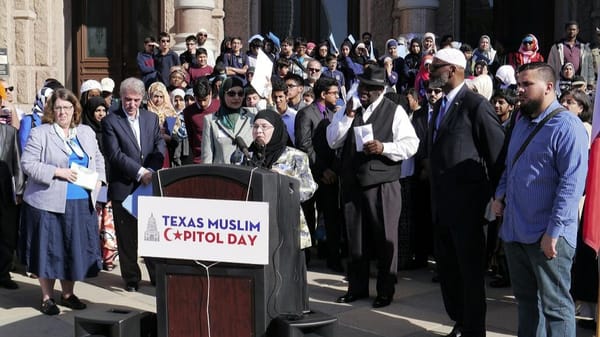
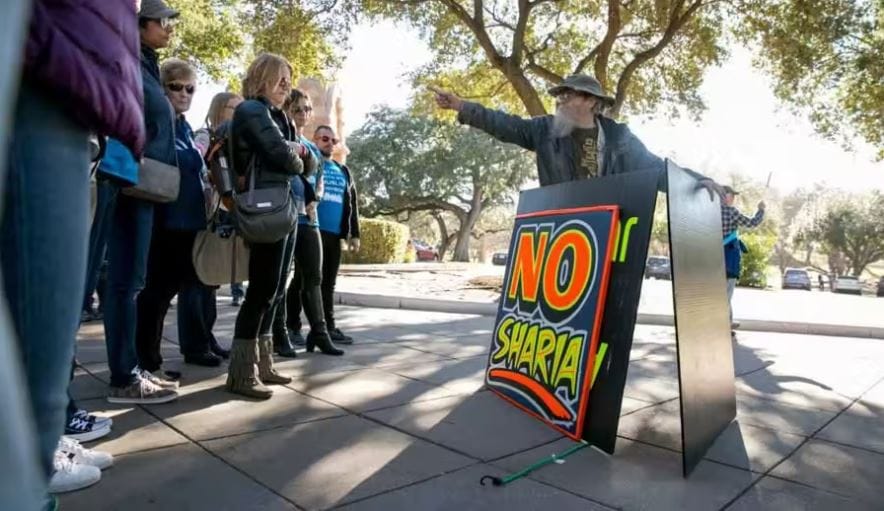
In Texas on and around November 22, 2025, new reporting raised serious questions about how federal security grants were distributed to alleged Islamist-linked groups while state leaders publicly cracked down on Sharia law.
The basic facts:
Blaze News staff writer Candace Hathaway, writing for Blaze Media, reported that roughly $13 million in federal and state-directed funds went to mosques and community groups in Texas that the Middle East Forum links to Islamist movements and hostile regimes.[1]
Governor Greg Abbott recently designated the Muslim Brotherhood and CAIR as foreign terrorist and transnational criminal organizations and called for investigations into alleged Sharia “courts” operating in Texas.[1]
Abbott’s office told Blaze News the contested grants came from federal homeland security programs (DHS/FEMA Nonprofit Security Grants), not Texas tax dollars, and suggested vetting belonged mainly to Washington.[1]
Sam Westrop of the Middle East Forum argued that Texas, as the primary grantee, still had the duty and discretion to vet and exclude risky sub-recipients, but did not.[1]
Why It Matters
This matters because it touches:
The vulnerability of Western institutions to Islamist strategy
The ease with which public money can be captured by groups whose long‑term aims clash with constitutional order
Islamist movements are not merely religious communities; they are often political projects with documented strategies for influencing courts, culture, and security policy from within. When such movements gain access to taxpayer-funded security programs, the danger is not only misuse of money but the quiet strengthening of networks that do not share our assumptions about truth, law, or civic honesty.
The Tension or Question
In this story, federal security grants passed through Texas state agencies are being defended as routine aid to nonprofits, even when recipients are linked by credible sources to Islamist movements.
It raises a simple but serious question:
Are our leaders treating Islamist organizations as if they share our basic commitment to transparent, good‑faith citizenship, even when those movements have doctrines that permit or encourage strategic deception (often discussed under the term “taqiyya”) in pursuit of their goals?
What We See as Guardians (Commentary)
First, thanks to Candace Hathaway’s reporting for Blaze News at Blaze Media, we see a familiar pattern: Islamist‑aligned organizations positioning themselves as ordinary community partners—mosques, charities, cultural centers—while credible analysts trace their connections to broader movements with explicit geopolitical aims.[1] Western officials, eager to appear even‑handed, often treat every applicant as if ideology and long‑term strategy are irrelevant.
Second, Guardians must recognize that not every ideology approaches truth-telling the same way. In public debate, “taqiyya” is sometimes misused as a blanket accusation that all Muslims are lying. That is wrong and unjust. Many Muslim neighbors reject violence and desire simple peace.
But within certain Islamist streams, religiously framed arguments have been used to justify concealment or half‑truths when dealing with non‑Muslim authorities. When a movement already operates behind multiple front groups and euphemistic names, and then secures public grants meant for security, we should not assume that friendly branding equals transparent intent.
Third, the structure of the Nonprofit Security Grant Program—federal dollars, state screening, local recipients—creates exactly the environment where such tactics can succeed. Each layer can honestly say, “We followed procedure,” while few ask the deeper question: “Who are we actually strengthening?” If Islamist strategists study our rules more carefully than our own officials do, they will quietly gain resources, legitimacy, and infrastructure.
Finally, Guardians must hold two truths together at once:
Peaceful worshipers of any faith deserve protection from violence.
Movements that seek to replace or undermine constitutional order, and that are willing to cloak those aims, must not be rewarded with public funds—no matter how polished their grant applications look.
The Guardian’s Lens
It is not the role of free people to accept official stories without question.
From a Guardian’s perspective, this event is a signal and a warning:
When officials ignore the ideological and strategic realities of Islamist movements—including their willingness to use respectable fronts and, at times, deceptive tactics—public money and public trust become tools in someone else’s long game.
We, as Guardians, should:
Watch for how often “community group” or “faith partner” language is used to soften or obscure documented ties to Islamist networks.
Refuse the naïve assumption that every organization approaching the state does so with the same regard for truth, transparency, and constitutional limits.
Practice patient but firm discernment: distinguish between ordinary Muslim neighbors seeking safety and organized Islamist projects that use religious language to advance political and civilizational aims.
Next Step for the Reader
As Guardians, today we can:
Ask our local and state representatives, in clear and respectful terms, how they screen for ideological risk—including Islamist front groups and deceptive practices—before endorsing any organization for security grants.
Want to Go Deeper?
Further reading:“Islamist groups in Texas rake in $13M in taxpayer-funded grants amid Abbott’s battle against Sharia law” — Candace Hathaway, Blaze News (Blaze Media)[1]