The Event in Plain Terms (Summary)
Around the world, governments and corporations are rolling out digital identity systems that tie your life to a single, centralized profile.
In practice, this looks like:
- Government digital IDs needed for taxes, benefits, voting, and access to services.
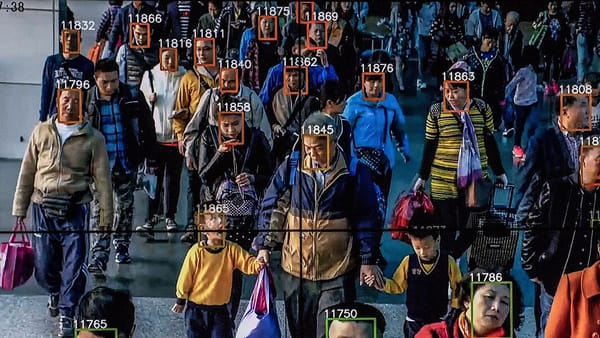
- Travel and border systems that link your identity to biometric scans, travel history, and risk scores.
- Private platforms (banks, airlines, apps) that demand verified IDs to use their services, “for your safety.”
Each piece is presented as a sensible upgrade: less fraud, smoother travel, faster check‑ins, and better “personalization.”
Why It Matters
This matters because it quietly reshapes how freedom works:
- When your identity, money, and movement are all tied to one digital key, whoever controls that key controls your access to life.
- A system that can instantly verify you can also instantly deny you—quietly, without trial or debate.
- What begins as protection against criminals can become a tool to pressure citizens into “acceptable” beliefs and behavior.
For ordinary families, this is not science fiction. It is a slow, incremental shift from rights you carry by nature to permissions you hold at the pleasure of a database.
The Tension or Question
Digital IDs are sold as neutral tools:
- “If you’re not doing anything wrong, you have nothing to fear.”
- “This is just about efficiency and security.”
But history—and common sense—tell a different story.
The tension is simple:
How much of your life should require permission from a centralized, digital identity system that someone else controls?
When access to planes, trains, bank accounts, and online platforms all run through the same gate, it only takes one policy change to turn “safety” into soft punishment.
As Guardians, we look at digital IDs through the lens of power, trust, and human nature.
First, power rarely gives up what it gains.
Once authorities have the ability to link identity, movement, and money, they will not simply walk away from that leverage. Crises—terrorism, pandemics, unrest—will be used to expand what can be tracked, scored, and restricted.
Second, trust in institutions is collapsing for good reason.
The same systems that censor speech, de‑platform dissidents, and freeze bank accounts in the name of “safety” are now asking for unified, verified digital identity. We would be fools to ignore that pattern.
Third, human beings are trained by habits of convenience.
Every time we accept a little more frictionless life in exchange for a little less privacy and freedom, we rehearse obedience to systems we don’t control. We are being taught to expect that:
- It is normal to show ID for everything.
- It is normal for travel and payments to be revocable.
- It is normal for algorithms to decide who is “safe” or “trustworthy.”
Digital IDs are not evil by definition. But in a culture unmoored from God and truth, they are perfectly suited to become an invisible leash.
The Guardian’s Lens
It is not the role of free people to hand over total visibility and control to any system simply because it is efficient.
From a Guardian’s perspective, digital IDs are a warning flare:
Any tool that can quietly turn “access” on and off can become a weapon against conscience, dissent, and faith.
We, as Guardians, should:
- Watch proposals for national IDs, biometric travel systems, and ID‑linked payment platforms—not just for what they promise, but for what they enable.
- Refuse to accept the idea that safety requires total visibility and control over ordinary citizens.
- Practice small acts of resistance to dependency: keeping some transactions, relationships, and records outside the reach of a single digital gatekeeper.
Next Step for the Reader
As Guardians, today we can:
- Have one concrete conversation with family or close friends about where we draw the line: What parts of our lives will we refuse to tie to a mandatory digital ID, even if it’s less convenient?
Want to Go Deeper?
For readers who want to dig into how digital IDs and related systems can expand surveillance and control, here are some starting points:
- Digital ID and EU frameworks (pro– and critical views)
- IDAS 2.0 & the EU Digital Identity Wallet: Europe’s New Trust Layer for the Digital World — overview of the EU’s digital ID wallet vision.[1]
- EU Set the Global Standard on Privacy and AI. Now It’s Pulling Back — how the proposed “Digital Omnibus” could weaken GDPR, AI Act, and privacy rules.[2]
- The “Digital Omnibus” Leak: A Stealth Attack on the GDPR — analysis of how “simplification” can erode core data protections.[3]
- AI surveillance and social scoring in welfare systems
- Coded Injustice: Surveillance and Discrimination in Denmark’s Automated Welfare State — Amnesty’s report on AI‑driven welfare surveillance and social‑scoring‑like practices.[4]
- Denmark’s AI-powered welfare system fuels mass surveillance — overview of how AI welfare tools risk violating privacy and EU AI rules.[5]
- Civil liberties perspectives on digital rollbacks
- Joint statement: The EU must uphold hard-won protections for digital human rights — 127 civil society groups warn about the Digital Omnibus and digital rights rollbacks.[6]
- Forthcoming Digital Omnibus would mark point of no return — European Digital Rights’ take on why the package could be a “point of no return” for privacy and digital freedoms.[7]