The Crucible | The Virtue of Integration
Issue 3 | Thursday, February 26, 2026 | Formation Forge

– 4 min read

Issue 3 | Thursday, February 26, 2026 | Formation Forge

This is a formation issue — and formation begins on the inside. Before a Guardian can hold ground in the culture, they must first hold ground in themselves. This week we go into history, to a man who understood something the church of his era desperately needed to hear and largely refused to accept — that personal revival and cultural reformation are not two separate callings. They are one. His name was Charles Finney, and what made him dangerous to comfortable Christianity then is exactly what makes him essential now.
Guardians of Virtue | Charles Finney — The Virtue of Integration
In the 1820s, a young lawyer in upstate New York had a conversion experience so total, so disorienting, so complete that he walked into his law office the next morning and told his waiting client he had a retainer from the Lord Jesus Christ and could no longer take his case.
That was Charles Finney — and that moment tells you everything you need to know about the man.
Finney became the most influential revivalist in American history. But what set him apart from every other preacher of his era was not his method or his eloquence or even the extraordinary results of his meetings — towns where taverns closed, crime dropped, and entire communities were visibly transformed. What set him apart was his absolute refusal to separate what happened on the inside from what happened on the outside.
For Finney, a conversion that did not produce action was not a conversion. A faith that stayed inside the walls of a church was not yet fully faith. Personal revival and social reformation were not two separate callings — they were one. You could not genuinely encounter the living God and remain indifferent to the suffering of your neighbor, the corruption of your institutions, or the slavery of your fellow man.
This was not a popular position. The established church of his day was deeply uncomfortable with it. Respectable Christianity had made its peace with slavery, with poverty, with the quiet compartmentalization of faith into Sunday and away from Monday. Finney would not make that peace. He could not. The God he had encountered in that law office was Lord of everything — not just the sanctuary.
He paid for it. He was opposed by the religious establishment, mocked by the sophisticated, and excluded from the circles that controlled the respectable institutions of his day. He kept going for five decades. The revivals he led directly fueled the abolitionist movement. His students filled the ranks of those who fought and died to end slavery. The fruit of his integrated faith did not just save souls — it changed the course of a nation.
What made Finney dangerous to the comfortable Christianity of his era is exactly what makes him essential to ours.
We are living in a moment when the church has been told — and in many cases has told itself — that faith and culture are separate territories. That the sanctuary and the school board belong to different worlds. That a good Christian minds their spiritual business and leaves the civic business to others.
Finney knew where that road leads. He had seen it. He had preached against it for fifty years.
The Guardian who is genuinely formed — whose inner life has been built on something real — cannot remain in that compartment. Not because they are angry. Not because they are political. But because integration is what happens when faith becomes whole. When what you believe on Sunday starts showing up on Monday. When the God who is Lord of your heart becomes Lord of your schedule, your vote, your school board meeting, your neighborhood, your nation.
That is not a political statement. It is a formation outcome.
Finney didn't go to the culture to fight. He went because he had been changed — and changed people cannot stay still.
Where in your life have you drawn a line between your faith and your action — and called it humility? Name it honestly. That line is not humility. It is the compartment Finney spent his life dismantling.
This week on The Guardians' Cross, we published Be Fruitful and Multiply Was Never Optional — a direct look at the covenant calling of Christian families, the demographic reality we can no longer ignore, and why faithful fruitfulness is not a demographic strategy but a response to the God who commanded it from the beginning.
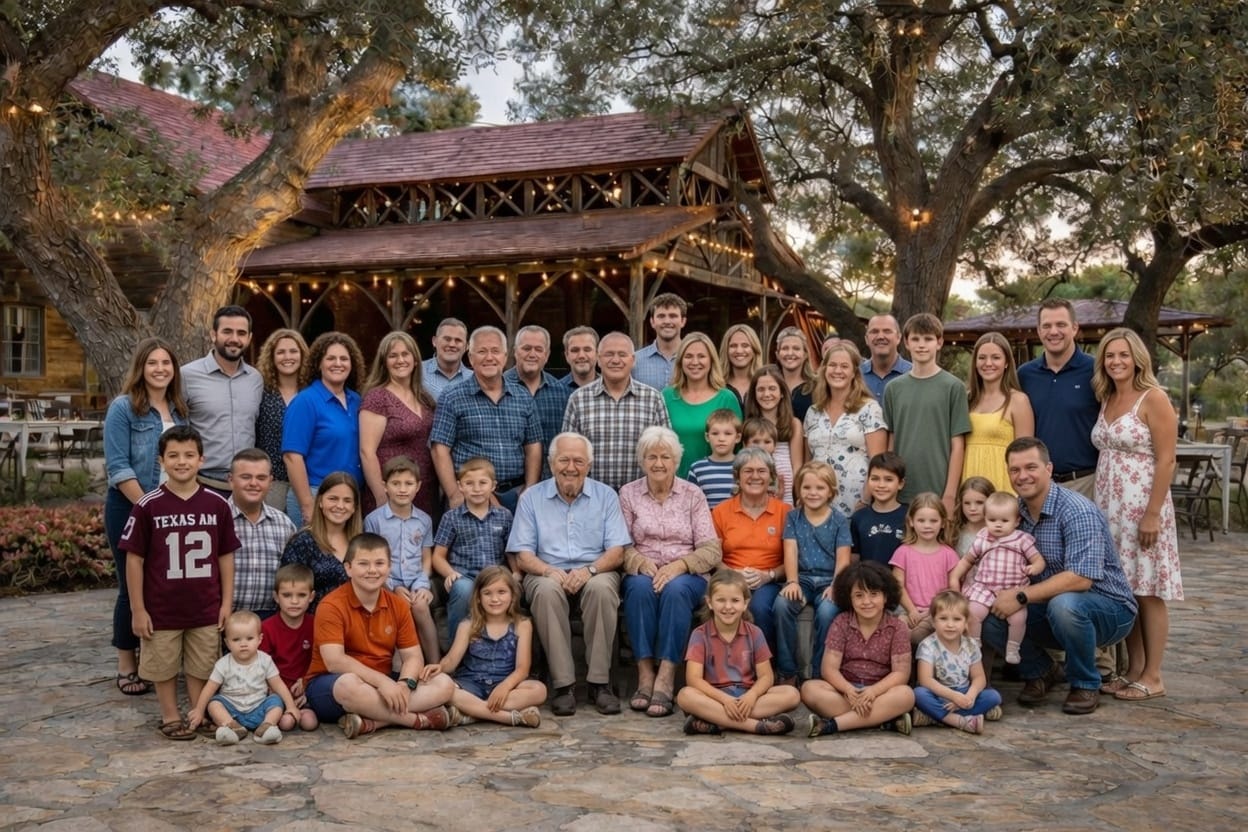
The Christian family was never just a private arrangement. It was always a covenant with civilizational consequences.
Finney did not wait for the church to give him permission to act. He waited for God — and then he moved. The same invitation stands today. Carry the Cross into every corner of the life you have been given. The integration has always been the point.
Lectures on Revivals of Religion — Charles G. Finney. The source itself. Dense but rewarding — Finney in his own voice on what revival actually demands of the people who experience it.
Charles Finney and the Spirit of American Evangelicalism — Charles Hambrick-Stowe. The best modern biography. Puts Finney's integration of faith and reform in full historical context.
Memoirs of Charles G. Finney — Charles G. Finney. His autobiography. Unfiltered, direct, and at times astonishing — the man wrote the way he preached.