They're Watching. Good.
When the cameras turn toward formed Christians, it means formed Christians are becoming impossible to ignore.

– 5 min read

When the cameras turn toward formed Christians, it means formed Christians are becoming impossible to ignore.
Monday, March 9, 2026
CNN anchor Pamela Brown embedded with a Christian community in Moscow, Idaho. She reported what she saw. The response, she said, was overwhelming.
She's producing a one-hour special investigation.
They're calling it the rise of Christian Nationalism.
The preview for the special fixates on one moment as its cultural hinge point: the assassination of Charlie Kirk. That event, according to CNN's framing, catalyzed something in conservative Christian America — a sharpening, a mobilization, a new seriousness of purpose.
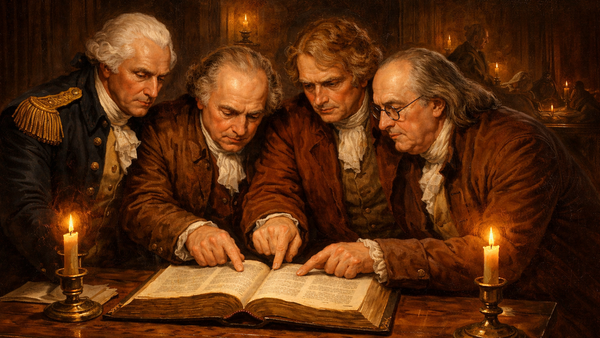
The label CNN is using — "Christian Nationalist" — is doing specific work. It is designed to take a set of ordinary, historic, biblical convictions and attach them to something sinister. The apparently radical idea that America is a historically Christian people who would be blessed by honoring God and His Word. Frame it that way and it sounds dangerous. Frame it accurately — as the conviction of most of the men who founded this nation and most of the believers who have called it home for 250 years — and it sounds like memory.
That is exactly what this is. Memory. And memory, in a culture working hard to erase it, is a revolutionary act.
When a major media outlet commits resources to a one-hour investigation into a cultural movement, it is not because that movement is irrelevant. It is because that movement is becoming impossible to ignore. CNN does not produce specials about things that don't scare them.
This special is not primarily about theology. It is about power — specifically, about who gets to shape the culture, define its terms, and determine what is permitted in the public square.
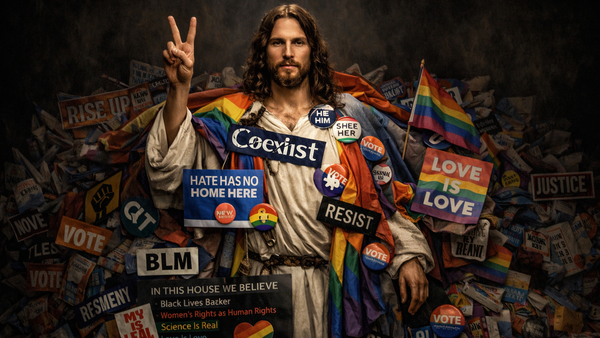
For decades, the answer to that question has been: not Christians. Not openly, anyway. Not with confidence. The acceptable version of Christian engagement in public life has been quiet, deferential, and carefully de-fanged. Believers who spoke too directly about biblical conviction were branded as theocrats. Those who showed up too visibly in civic life were called nationalists. The message was clear: your faith is welcome in the private sphere, and nowhere else.
Something has shifted. It is not that Christians have become more radical. It is that they have become more serious. More willing to carry what they believe past the church door and into the Monday morning world. More clear-eyed about what is at stake. More willing to stand in the gap between what America was built to be and what it is drifting toward — without apology.
That is what CNN is actually seeing. Not a fringe movement. Not a dangerous ideology. Formed men and women who remember who they are — and who have decided that remembering is not enough. That it has to be carried.
The cameras turned toward that. Of course they did.
There is a temptation, when the media turns its lens toward Christians, to shrink. To soften the language. To add qualifiers and caveats and assurances that we are not what they say we are. To spend more energy defending the label than doing the work.
It is worth resisting that temptation.
The people who built this nation did not spend their energy managing the King's opinion of them. They spent it building something worth defending and then defending it. Their convictions were not shaped by what their critics were willing to accept. They were shaped by what they knew to be true — and they carried those convictions into the public square at personal cost, without asking permission, because the moment demanded it.
That is not nationalism. That is faithfulness. That is the stewardship of an inheritance. That is the gap being filled by people willing to stand in it.
The only question worth asking is not what the cameras think of you. It is whether you are standing where you are supposed to stand, doing what the moment requires, with the character and conviction it demands.
Let them watch. Let them produce their specials. Let them try to put a name on what they're seeing.
What they're seeing is a people who remember who they are. And people who remember tend to be very difficult to stop.
Start with honesty. Are you carrying your convictions past Sunday? Into your workplace, your neighborhood, your school board, your civic life? Or have you accepted — quietly, gradually — the cultural arrangement that says your faith belongs in the private sphere?
The next time someone uses the term "Christian Nationalist" in your presence, don't defend the label. Reframe it. Ask them what, specifically, they are afraid of. The answer will tell you more about the actual battle than any cable news special ever will.
And pray — not for God to remove the scrutiny, but for the character to stand well under it.
Learn more about The Guardians' Cross → theguardianscross.org
The America worth passing on will not build itself. It will be built by men and women of faith who know who they are and refuse to stand aside. TGC exists to equip those people — to help them step into their identity as Guardians and engage every sphere of this culture with the authority this moment demands.