When Hospitals Must Choose: Conscience, Gender Medicine, and the Cost of Saying No
U.S. Catholic bishops have banned gender‑affirming care in Catholic hospitals, forcing a clash between conscience, medicine, and a culture that demands unquestioning affirmation.
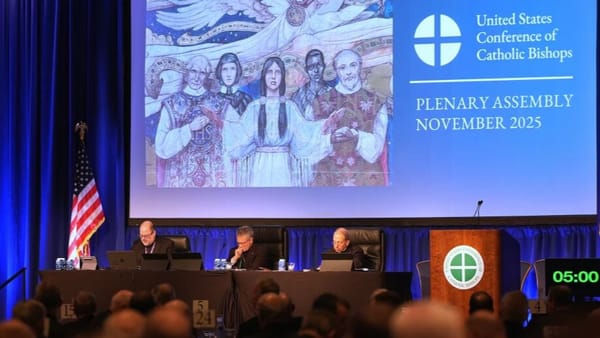
In mid‑November 2025, the U.S. Conference of Catholic Bishops voted to update their Ethical and Religious Directives for Catholic health care.[1][2]
The revisions:
Ban gender‑affirming / gender‑transition treatment at Catholic hospitals and facilities.
Explicitly forbid surgeries and other interventions that seek to make a healthy body resemble the opposite sex.[2]
Instruct Catholic providers to “preserve the integrity of the human body” when treating gender dysphoria.[2]
These directives guide thousands of Catholic health institutions, which together treat more than one in seven patients in the U.S.[3]
Why It Matters
This is not just an internal church memo. It affects:
Patients and families in cities and small towns where the only hospital is Catholic.
Doctors and nurses of faith caught between professional pressure and obedience to God.
The wider culture, which increasingly treats “gender‑affirming care” as unquestionable dogma.
At stake is whether Christian institutions are still allowed to practice medicine according to a Christian understanding of the body, or whether they must conform to an ideology that denies created sex as a given.
The Tension or Question
Two competing stories are forming:
Many in media and medicine frame this as “denying necessary care” to a vulnerable population.
The bishops (and many believers) see it as refusing to participate in harm—especially irreversible interventions on children and young adults.[2]
The core question for Guardians is simple:
Should Christian hospitals obey God’s design for the human body, even when the culture and medical establishment demand the opposite?
If the answer is yes, then conflict with regulators, accrediting bodies, and activist groups is not a bug—it is inevitable.
What We See as Guardians (Commentary)
As Guardians, we look beyond the headline to what this reveals.
First, it exposes the capture of medicine by ideology.
Major medical groups now treat “gender‑affirming care” as a settled standard, despite serious questions about long‑term outcomes, regret, and the ethics of experimental treatment on youth. Dissent is treated as hatred, not caution.
Second, it clarifies who still believes the body means something.
The bishops have said out loud what many doctors quietly feel: that a healthy body is not a mistake to be surgically corrected. To “affirm” someone by cutting, blocking, or suppressing what God designed is not compassion, it is confusion.
Third, it shows the cost of institutional conscience.
More than one in seven U.S. patients pass through Catholic hospitals.[3] For those institutions to say “no” to gender transition medicine is to invite lawsuits, media campaigns, and political threats. They could have chosen the easy path of quiet compromise. Instead, they drew a line.
That does not mean every Catholic hospital will be perfectly faithful. Policies can be ignored, bent, or undermined. But the directive itself is a public stand: we will not join this revolution against the body.
For Guardians, this is a preview of the pressure that will fall on schools, clinics, counseling centers, and even churches that refuse to go along.
The Guardian’s Lens
It is not the role of free people to accept every new “standard of care” without question.
From a Guardian’s perspective, this moment carries a clear warning and lesson:
When a society demands that healing institutions deny the meaning of the body, those who still tell the truth about male and female will be treated as enemies.
We, as Guardians, should:
Watch how governments, insurers, and licensing boards respond to this stand. Do they tolerate pluralism, or move to punish dissent?
Refuse the false choice between cruelty and compliance. It is possible to love people in deep confusion without endorsing medical harm.
Practice courage in our own spheres—families, churches, schools—speaking plainly about sex, the body, and identity even when it costs us comfort.
Next Step for the Reader
As Guardians, today we can:
Have one careful conversation—with a spouse, friend, or church leader—about how we will talk to our children, students, or congregations about sex and the body in light of this decision, so that when the hospital, school, or state takes a stand, we are not caught unprepared.
Want to Go Deeper?
Further reading (news explainer):U.S. bishops pass directive forbidding transgender surgeries at Catholic hospitals — Catholic News Agency[2]
Additional coverage from a secular outlet:U.S. bishops officially ban gender‑affirming care at Catholic hospitals — Associated Press / MedPageToday[1][3]