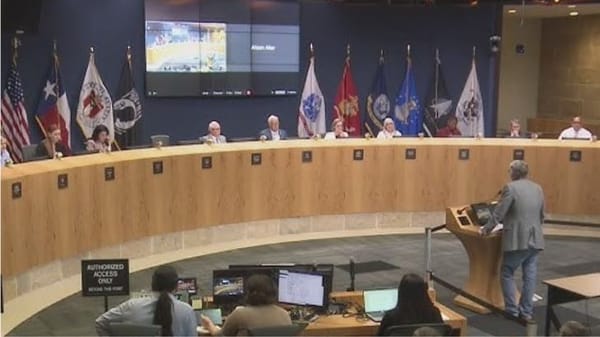
Most Americans picture religious liberty fights as Supreme Court showdowns. But the more common test is quieter and closer: a zoning board meeting, a permit process, a school facility policy, a compliance letter.
It is not always a law that says, “Christians must stop.” It is a system that says, “You may proceed—if you can survive the friction.”
Story in Plain Terms
Across the country, local governments have learned a simple tool: administrative pressure. They do not need to ban worship to burden worship. They can control space, time, cost, and access.
That pressure shows up in a few recurring forms.
1) Zoning and land-use friction
Cities can keep religious communities in a permanent state of negotiation by treating them differently than comparable secular assemblies.
For example, in Upper Arlington, Ohio, a Christian school challenged the city’s refusal to allow it to use a former office building for a pre-K through 12 school, arguing it was treated worse than comparable secular uses like daycares under RLUIPA’s “equal terms” provision.
Similarly, in Markham, Illinois, a church that had worshiped for years in a converted house ran into permit and enforcement conflict with the city, leading to litigation involving RLUIPA and state religious freedom law.
2) “Neutral” rules applied with unequal force
Sometimes the rule sounds reasonable. The problem is that it is enforced so that religious use is treated as uniquely suspect.
In Salinas, California, a federal court found the city’s ordinance violated RLUIPA because it treated places of religious assembly differently than theaters/cinemas in the same downtown zone.
And the U.S. Department of Justice has documented local zoning codes that barred churches from commercial districts while allowing comparable non-religious assemblies, prompting changes after federal investigation.
3) Public space access and viewpoint exclusion
Local power is not only about land. It is also about access.
In Good News Club v. Milford Central School, a public school district tried to exclude a Bible club from meeting after-hours in school facilities even though other groups could use the space. The Supreme Court held that once the school opened a limited public forum, excluding the club because it was religious was viewpoint discrimination.
These examples are not identical. They do not need to be. Together they show a consistent pattern: local authorities can turn “process” into a policy—one that makes public obedience harder, costlier, and more isolated.
Why It Matters
This matters because religious liberty is not only a right you possess. It is a freedom you practice. And practice always involves real places: buildings, meeting rooms, school auditoriums, public parks, and property you can actually use.
When local authorities can punish public obedience through red tape, fines, delays, and denial of access, freedom becomes a slogan instead of a lived reality.
And local fights form people. They teach ordinary Christians one of two lessons:
- Either “keep your head down and stay quiet.”
- Or “stand, speak, and endure.”
The Tension or Question
Local power is often justified as “order,” “safety,” and “community standards.” But it raises a simple, serious question:
Can a people remain free if the nearest authorities can functionally control the church through permits, policies, and pressure?
This is not only about legal clauses. It is about what kind of authority local leaders believe they possess.
A self-governing people expects government to stay in its lane: punish evil, protect the innocent, preserve order. But when officials begin treating the church as a special interest group to be managed, the lane changes. The state becomes a moral tutor.
Watch the playbook:
- Define the “public good” in purely secular terms.
- Treat Christian conviction as a threat to inclusion, safety, or progress.
- Use procedural power (permits, inspections, zoning, facilities policies) to make obedience expensive.
It is a softer form of coercion. There may be no prison cell. But the message is still clear: comply, conform, or be constrained.
The Guardian’s Lens
From a Guardian’s perspective, local pressure is often the first front in the larger war over authority.
When the fight comes home, we should not be surprised. We should be ready.
As Guardians, we should:
- Learn how local power works in our city and county (who decides, who votes, who enforces).
- Refuse fear-based silence. Quiet compliance is how rights are lost without a headline.
- Build thick community. Isolated families are easy to pressure. A coordinated body is harder to intimidate.
Carry the Cross
This is what faithful action looks like this week, where you actually live.
- Show up: Identify the next local meeting where power is exercised (city council, school board, zoning board) and attend—quietly, respectfully, ready to speak if needed.
- Clarify the rule: Pull the relevant policy (zoning code section, facilities-use policy, permit checklist). Highlight where religion is treated differently than comparable secular uses.
- Bring one ally: Do not go alone. Bring one other Guardian and decide who will speak if public comment opens.
- Pray with precision: Ask God for courage without heat, clarity without fear, and favor with local leaders—while refusing compromise with false peace.
Want to Go Deeper?
- Read the text of RLUIPA’s protections for religious land use, then compare the law’s plain meaning to how your city actually behaves when a church, school, or ministry tries to expand.
- Review your school district’s facilities-use policy and ask a simple question: “If a secular club can meet here, why can’t a religious one?”
Source Links / Research
DOJ Civil Rights Division — RLUIPA investigation closed after town allowed Immanuel Church to meet + amended zoning code (churches barred from commercial districts while comparable non-religious assemblies were allowed).[https://www.justice.gov/crt/rluipa-investigation-closed-after-town-allows-church-meet-and-amends-zoning-code]
New Harvest Christian Fellowship v. City of Salinas (N.D. Cal. / 9th Cir. 2022) — city ordinance treated religious assembly differently than theaters/cinemas in a downtown zone (RLUIPA “equal terms” dispute).[https://www.hansonbridgett.com/Publications/articles/220331-2100-rluipa-violation]
Tree of Life Christian Schools v. City of Upper Arlington (6th Cir. 2018) — city refused zoning approval for a Christian school while allowing daycares/other similar uses (local land-use leverage).[https://law.justia.com/cases/federal/appellate-courts/ca6/17-4190/17-4190-2018-09-18.html]
Church of Our Lord and Savior Jesus Christ v. City of Markham (7th Cir. 2019) — long-running zoning/permit conflict over use of a residential property as a house of worship (RLUIPA / state RFRA issues).[https://law.justia.com/cases/federal/appellate-courts/ca7/18-1432/18-1432-2019-01-17.html]
Good News Club v. Milford Central School (U.S. 2001) — public school district denied after-hours access based on religious nature; Supreme Court held it was viewpoint discrimination in a limited public forum.[https://supreme.justia.com/cases/federal/us/533/98/]