The Crucible | Athanasius Against the World
Issue 6 | Thursday, March 5, 2026 | The Formation Forge
– 5 min read

Issue 6 | Thursday, March 5, 2026 | The Formation Forge
This week we named a pattern: institutions that bear a name but have lost the mission. Schools that call themselves Christian while directing students toward the abortion industry. School boards that quietly assumed authority over children while the parents most affected were not in the room. The pattern is not new. And neither is the answer. This week's Guardian of Virtue stood against the same pattern — at a scale that makes our moment feel almost manageable. His name became a phrase. His life became a model. His virtue is the one that makes every other virtue sustainable.
The year is 325 AD. The Council of Nicaea has just affirmed one of the most consequential theological statements in the history of the church: that Jesus Christ is fully God — not a created being, not a lesser deity, but of the same substance as the Father. The threat they were addressing had a name: Arianism. And for the next several decades, Arianism would come closer to becoming the official theology of the Christian world than most believers today realize.
What stood between the truth of Nicaea and its erasure was, for long stretches of history, a single man.
Athanasius became Bishop of Alexandria in 328 AD, three years after the council. He was young, sharp, and entirely without interest in the political calculations that governed the institutional church around him. When successive Roman emperors threw their support behind the Arian position — because a subordinate Christ was a more manageable Christ for imperial purposes — the bishops of the church largely followed. Councils were convened. New creeds were drafted. Athanasius was condemned, then exiled. Then recalled. Then condemned again. Then exiled again. Five times in total, spanning seventeen years of his episcopate, he was removed from his see and driven from his city by emperors, councils, and fellow bishops who found his refusal to yield politically inconvenient.
At one point, a trusted advisor came to him with the simple observation that the entire world had turned against him. Athanasius is reported to have replied without hesitation: Then Athanasius is against the world.
He meant it. And he held it. For decades, with no institutional backing, no political cover, and no guarantee that the tide would ever turn, he continued to write, to teach, to pastor, and to contend for what the Council of Nicaea had declared — because he believed it was true, and because he understood that what was at stake was not a theological nuance but the identity of the God his people worshipped.
The emperors who exiled him died. The bishops who condemned him eventually gave ground. The Arian moment — which had looked, at its peak, like the permanent future of the church — collapsed. And the theology Athanasius had defended alone through five exiles became the settled conviction of orthodox Christianity ever after.
Athanasius contra mundum. The phrase did not become famous because of his victories. It became famous because of his refusal — the decades-long, costly, institutionally unsupported refusal to trade what was true for what was convenient.
The virtue on display in Athanasius is not primarily courage, though it required enormous courage. It is Fidelity — the deep, formed commitment to remain true to what you know is right, regardless of the institutional pressure surrounding you, regardless of who has abandoned the position alongside you, regardless of how long the faithfulness is required to last.
Fidelity is the virtue that makes long obedience possible. Courage gets you into the gap. Fidelity keeps you there.
This week you read about Christian colleges that have drifted from their founding mission — not through hostile takeover but through the slow accumulation of small decisions made by people who were never formed to hold the line. You read about parental authority quietly assumed by institutions while the people most affected were absent from the room. The common thread in every one of those stories is not malice. It is the absence of men and women with the formed conviction to stay.
Athanasius was exiled five times. He was never absent. Every time he was driven out, he came back — to his city, to his people, to the position he had been given to hold. He understood something that the Guardians of this generation need to internalize: the gap does not close itself while you wait for better conditions. It closes because someone refuses to leave it.
You will not be exiled for your convictions. But you will be pressured. You will be outvoted. You will be in the room when the institution you are part of makes a decision you know is wrong, and you will have to decide whether the cost of saying so is worth it. You will be tempted to conclude that you are the only one who sees what you see — and that being the only one means you must be mistaken.
Athanasius was the only one for decades. He was not mistaken.
The world did not need Athanasius to be popular. It needed him to be faithful. It needs the same from you.
Fidelity is not stubbornness dressed up in theological language. It is the formed conviction to remain true to what you know — in the face of pressure, isolation, and the slow attrition of a long stand. The question is not whether you will face a moment that demands it. The question is whether you will have built the kind of inner life that can sustain it.
This week on The Guardians' Cross: They Kept the Name and Lost the Mission — a new report documents 114 Christian colleges with ties to the abortion industry, and the numbers have risen every year since Roe fell. The pattern Athanasius faced in 325 AD is the same one operating in American institutions today. Worth reading before you write another check.
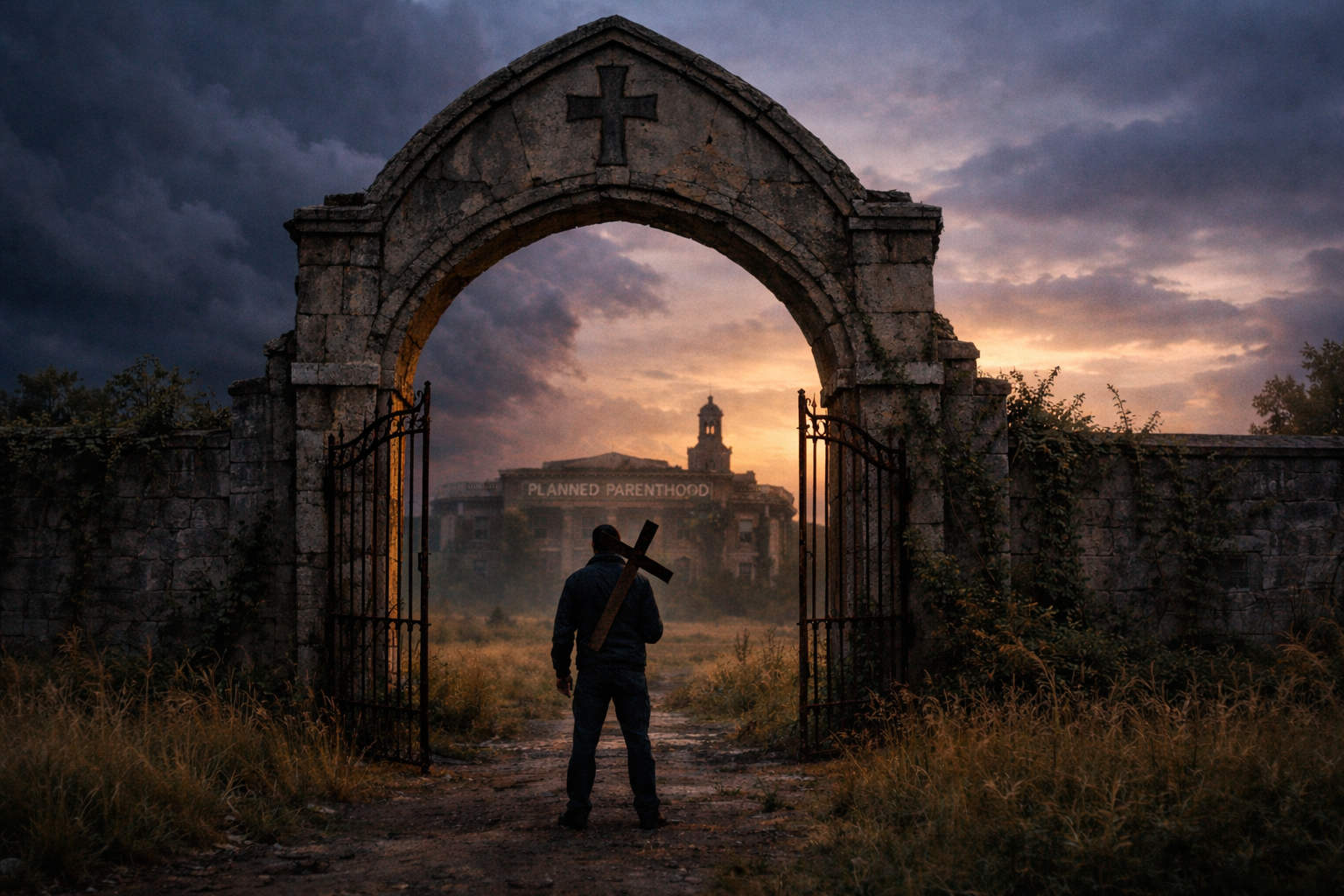
A new report exposes how Christian higher education is being captured from within — and what it's going to take to stop it.
The world needs fewer people waiting for institutional permission to hold the line — and more people formed enough to hold it without it. Find your gap. Name what is true. Stay. Carry the Cross into the long obedience, not just the dramatic moment. That is where Guardians are made.
On the Incarnation — Athanasius of Alexandria. The short theological masterpiece he wrote as a young man — before the exiles, before the councils, before the long stand. C.S. Lewis wrote the introduction to the modern edition and called it one of the most important books a Christian can read. He was right.
Athanasius: The Coherence of His Thought — Khaled Anatolios. The most thorough modern treatment of Athanasius's theology and why it mattered. For the Guardian who wants to go deeper than the biography.
The Story of Christianity, Vol. 1 — Justo González. The best single-volume narrative history of the early church, with excellent treatment of the Arian controversy and what was actually at stake.