The Moment
The American education system is producing graduates who cannot think, cannot argue, and cannot explain what they believe or why they believe it. This is not a fringe complaint. It is the documented conclusion of employers, university professors, and researchers across the political spectrum.
At the same time — quietly, without much press coverage — a countercultural education movement has been growing for thirty years. In 1993, ten schools in the United States offered a classical Christian curriculum. Today, the Association of Classical Christian Schools alone counts more than 450 member schools. More than a quarter of all evangelical Christian schools — 26% — now use a classical curriculum. The movement has reached what researchers are calling a critical mass.
Something is being built. A formed person should understand what it is.
The Story
Classical Christian education is built on a model as old as Plato and Socrates — and as old as the early church. It is structured around the trivium: three stages of learning mapped to how children actually develop.
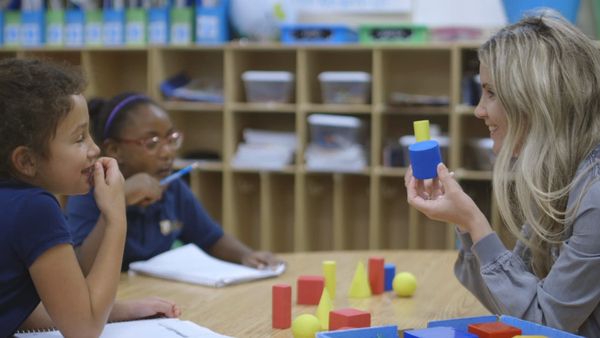
In the grammar stage — roughly grades one through four — children memorize. Math facts. History timelines. Bible verses. Poetry. The brain at this age is wired for absorption, and classical education fills it with the raw material of a lifetime of thinking.
In the logic stage — grades five through eight — students revisit the same subjects but now learn to analyze, debate, and test what they know. Not just what is true, but why it is true, and how you know the difference.
In the rhetoric stage — grades nine through twelve — students learn to express and defend what they believe with clarity and persuasion, in writing and in speech. The goal is not a graduate who can pass a standardized test. It is a graduate who knows what they believe, why they believe it, and can make the case for it in any room they enter.
God is at the center of every subject. History, literature, science, mathematics — all of it taught as part of one coherent story pointing back to a Creator. Truth, goodness, and beauty are the stated goals. Job training is not.
The numbers reflect it. Between 2011 and 2022, the revenue of the ACCS grew from $301,000 to $1.76 million. The CiRCE Institute grew from $298,000 to $2.08 million in the same period. The Classic Learning Test is now accepted at more than 300 colleges and universities alongside the SAT and ACT.
What It Reveals
The public school system spent the last century replacing formation with job training, removing God from the center, and dismantling the curriculum that had produced literate, thinking, morally serious people for two thousand years. The results are visible in every institution in the country.
The classical Christian education movement is a direct response — not a reactionary one, but a constructive one. It is not primarily fighting the public school system. It is building something else entirely, from the ground up, inside a parallel structure the public school system cannot touch.
The students sitting in these classrooms are being formed to know what they believe and why, to argue it with precision and grace, and to carry it into every room they enter for the rest of their lives. They are being equipped before they leave school for exactly what every formed believer spends their adult life learning to do.
The Frame
Proverbs 22:6: Train up a child in the way he should go; even when he is old he will not depart from it.
This is not a sentiment. It is a strategy. The classical Christian education movement has taken it seriously. Thirty years. 10 schools to 450. A fully articulated ecosystem of K-12 schools, college admissions tests, undergraduate programs, and graduate studies — all oriented toward forming people who know what is true, can defend it, and will not be moved from it.
The world is full of adults who were never given that formation and are scrambling to build it later. The classical Christian education movement is trying to make sure the next generation does not start from scratch.
What It Asks
For the Guardian who is a parent, educator, school board member, or community leader, this is not abstract. It is a sphere of deployment — one of the most important rooms you can carry your faith into.
Do you know if there is a classical Christian school in your area? Do you know what your children are being formed to believe — and whether that formation will hold under pressure? Do you know anyone inside the education system fighting for something different who needs to know they are not alone?
The graduates the culture is producing cannot answer the questions the culture is asking. The graduates classical Christian education is producing can. That gap is the opportunity. It is open right now.
Further Reading
- ACCS — Association of Classical Christian Schools — School finder, resources, and the annual Repairing the Ruins conference. Visit here →
- CBN News — "Teaching Students the Way the Founders Learned" — A clear overview of what classical Christian education is and why it is growing. Read here →
- Norms and Nobility — David Hicks (1981, revised 1999). The foundational philosophical argument for classical education. Find it here →
Learn more about The Guardians' Cross → theguardianscross.org