The Nation That Cannot Calm Down
The Crucible | Issue 11 | Tuesday, March 17, 2026 | The Cultural Front

– 4 min read


The Crucible | Issue 11 | Tuesday, March 17, 2026 | The Cultural Front
More than half of Americans — 59% — enter 2026 anxious about their finances. Fifty-three percent are anxious about the coming year. Forty-nine percent are anxious about current events. The proportion of Americans taking anxiety medication has risen by more than 20% in the last five years. The mental health industry is now one of the fastest-growing sectors of the American economy.
The culture's diagnosis is not wrong. Something is broken. The question a Guardian has to ask is whether the culture's prescription — more therapy, more medication, more optimization, more management — is actually treating the disease, or managing its symptoms while the root cause goes unaddressed.
The anxiety epidemic is real. This is not a conservative talking point or a progressive one. The data runs across party lines, income brackets, age groups, and geography. Americans are broadly, demonstrably, measurably unsettled — and the trend line over the last decade moves in one direction.
The culture has responded with an industry. Therapy access has expanded dramatically. Mindfulness apps are on millions of phones. Anxiety medication use is at historic highs. Major employers now offer mental health benefits as a competitive differentiator. The vocabulary of anxiety management has moved from clinical settings into everyday conversation. Every workplace, school, and public health campaign is oriented around the same basic message: here is how to manage what you are feeling.
A Guardian should not dismiss any of that. Some of it is genuinely helpful. But a Guardian should also be honest about what all of that management talk is not saying — and what it cannot say, because it has no category for it.
What the culture cannot offer is peace. Not managed anxiety. Not reduced symptoms. Not coping strategies for the next quarter. Peace. The kind Paul describes from a Roman cell in Philippians 4 — a peace that does not depend on circumstances resolving, that does not require outcomes going your way, that "surpasses understanding" precisely because it operates on a different logic than the world uses.
The world is anxious because it is trying to hold together a life that was never designed to be held together by human effort alone. The financial pressure is real. The political uncertainty is real. The cultural turbulence is real. But the anxiety is not primarily a clinical problem. It is a spiritual one. It is what happens when a man — or a nation — tries to carry the weight of tomorrow without the God who already holds it.
A Guardian who understands this does not walk into an anxious room with a prescription or an optimization tip. He walks in carrying something the room doesn't have: a settled peace that is not the product of better circumstances but of a better anchor. That peace is not passivity. It is not indifference to the real things pressing on real people. It is the most powerful posture available — because it is not manufactured. It cannot be purchased. It cannot be optimized. It can only be received from the God who is near, and then carried deliberately into every room a Guardian occupies.
That is not a private blessing. It is a cultural witness. In a nation that cannot calm down, a Guardian who carries the peace of God is not normal. He is conspicuous. And that conspicuousness is not an accident — it is the point.
The culture is looking for something it cannot find in the tools it is using. It is looking for peace. A Guardian carries the source.
The anxiety epidemic is not primarily a mental health crisis. It is a formation crisis. The culture is anxious because it has lost the anchor that produces settled peace — and it is trying to solve a spiritual problem with clinical tools.
A Guardian is not immune to pressure. But he is anchored differently. And in a room full of people trying to manage what they're feeling, the man who carries genuine peace is the most countercultural person present.
Carry it in. Carry it visibly. Let the contrast speak.
Monday's featured article opens the week with the same question from a different angle — what the culture's anxiety reveals about what it has abandoned, and what a Guardian's presence in that space is actually for. If you haven't read it yet, start there.
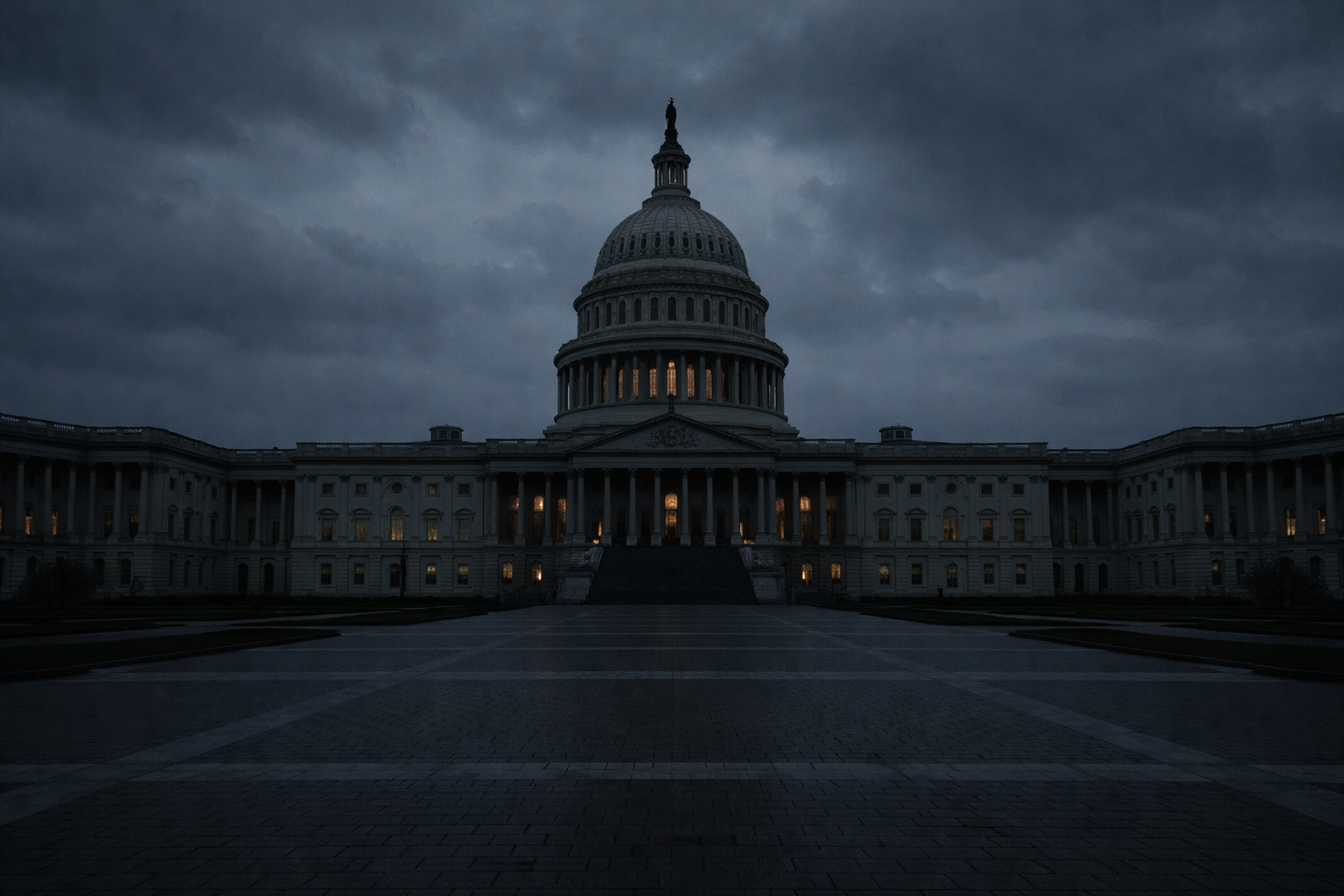
Nearly three in four Americans are anxious about the future of their country. That number tells us something important — not just about politics, but about what we have built our stability on.
Philippians 4:4-9 — The anchor text for this week. Read it slowly. Paul is writing from prison. That context is not incidental to the argument.
When the Mind Runs Ahead of the Moment — A short read on the neuroscience of anxiety and the distinction between fear and worry. Useful for understanding what the culture is actually experiencing — and why peace at the level Paul describes is not a reframe. It is a different category entirely.
The Screwtape Letters — C.S. Lewis (1942). Screwtape's most reliable tool against men is not temptation toward obvious evil. It is anxiety about tomorrow. Lewis saw this clearly eighty years ago. The chapter on "the Future" is as relevant as anything written this year.
The nation is anxious. That is not your condition — it is your assignment.
You were not formed to manage your anxiety more effectively than the next man. You were formed to carry the peace of God into the rooms where anxiety is the operating system.
Show up settled. Let them wonder why.
Carry the Cross.