The Cost of Conviction
Jaden Ivey said what millions of Christians believe. The NBA showed you exactly what that costs.

– 4 min read


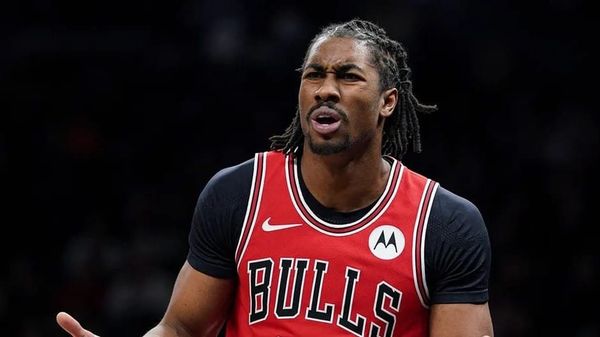
Jaden Ivey said what millions of Christians believe. The NBA showed you exactly what that costs.
On Monday morning, Chicago Bulls guard Jaden Ivey went on Instagram and said something that hundreds of millions of Christians around the world believe — that the celebration of homosexuality is unrighteous before God.
By Monday afternoon, he didn't have a job.
The Bulls released the 24-year-old, citing "conduct detrimental to the team." Coach Billy Donovan told reporters the organization has people from "all different walks of life" and that Ivey's comments didn't reflect their values. The NBA, for its part, said nothing — because it didn't need to. The institution handled it.
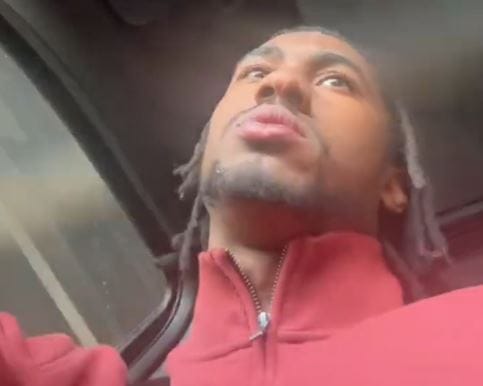
Ivey had posted a series of Instagram Live videos over several days, speaking at length about his Christian faith. In one Monday morning stream, he called out the NBA for celebrating Pride Month, saying it promotes "unrighteousness." He was not on a court. He was not in a locker room. He was not speaking in any official capacity on behalf of the Chicago Bulls. He was a private citizen, on his own time, on his own personal platform, speaking about his personal faith.
The Bulls waived him the same afternoon.
The headline across every sports outlet reads: "Bulls waive Jaden Ivey after anti-gay comments."
Notice the framing. Not "Bulls waive Jaden Ivey after he expressed Christian convictions." Not "NBA enforces ideological conformity." Anti-gay. As if the operating category for what Ivey said is hatred rather than theology. As if a man who reads Romans 1 and believes it is, by definition, someone who hates the people it addresses.
This is how the silencing works. It doesn't require a law. It requires a label.
It is also worth examining the contractual mechanism the Bulls invoked. The NBA Uniform Player Contract requires each player to conduct himself according to the "highest standards of honesty, citizenship, and sportsmanship" and to refrain from doing anything "materially detrimental or materially prejudicial to the best interests of the Team or the League." Nowhere in that contract are those standards specifically defined. The phrase "conduct detrimental" has no enumerated list, no fixed boundary, and no objective measure. Its meaning is determined entirely at the discretion of team management and the Commissioner. That is not an oversight. It is a design choice — one that grants the league authority to decide, in any given moment, what morality means and whose convictions qualify as acceptable.
The NBA has a documented history of players committing acts of genuine criminal conduct — felony domestic violence, assault, weapons charges, driving under the influence — for which the league's response was measured suspensions, fines, and rehabilitation programs. Miles Bridges entered a no contest plea to a felony domestic violence charge and received a 30-game suspension — then returned to play. Darren Collison pleaded guilty to inflicting corporal injury on his wife and received an 8-game suspension. Gilbert Arenas brought firearms into an NBA arena and received a 50-game suspension. In each of these cases the institution's posture was consistent: the player made a mistake, the player will be disciplined, the player's career will continue. In none of these cases was a man removed from the league the same day the conduct occurred.
A felony conviction is recoverable. Quoting Romans 1 on Instagram is not. That is not a conduct standard. That is a hierarchy of values — and it tells you exactly what this institution worships.
Here is what actually happened beneath the press release: A young man, newly surrendered to Christ, tried to bring his faith into every room he entered. And a billion-dollar sports organization decided that was incompatible with their culture — a culture that puts Pride Month on its billboards, its arena floors, and its official broadcast partnerships without apology.
The league that celebrates one set of values openly and aggressively cut the man who named those values as unrighteous.
Let's be honest about Ivey's approach. Hour-long Instagram Live streams are not precision instruments. But Jaden Ivey is 24 years old — a young man who, by his own account, is newly alive in Christ and still learning what it means to carry that conviction into public life. He is doing what his generation does: processing in real time, on camera, through the platforms he grew up on. The delivery is unformed. That is not a character indictment — it is a formation gap. It is what happens when conviction arrives before discipleship catches up.
That critique stands. And it changes nothing about what was done to him.
Billy Donovan said they want everyone to "have a high level of respect for one another." That sounds reasonable. But respect, in that sentence, is a one-way door. The league can proclaim its values in every arena in the country. Ivey cannot proclaim his on Instagram without losing his contract. That is not mutual respect. That is submission.
Men and women of conviction need to watch this story carefully — not because Jaden Ivey is a martyr, and not because his execution was flawless, but because the mechanism that removed him is the same mechanism operating in your workplace, your industry, your institution.
It doesn't announce itself. It issues a press release about "conduct detrimental to the team." It talks about standards and respect and inclusion — and it reserves the right to define all three terms. And when someone stands up and says this is unrighteous, the institution responds not by arguing with them but by removing them.
That is the move. Know it. Name it. Don't be shocked when it comes.
Ivey said one thing on that Instagram Live that was worth keeping: "So how is it that one can't speak righteousness?"
It's a good question. The answer is that you can. It will simply cost you something to do it.
That has always been the deal. The only question is whether you knew that going in — and whether you decided it was worth it anyway.
That's not a basketball question. That's a formation question. And it's exactly the one every person reading this needs to answer before they step into the arena.
The Guardians' Cross exists to equip believers to engage the culture with faith, conviction, and authority — in every room they enter, and every arena where their voice can reach.
Learn more about The Guardians' Cross → theguardianscross.org