The Crucible
Issue 20 | Tuesday, April 7, 2026 | The Cultural Front

– 4 min read


Issue 20 | Tuesday, April 7, 2026 | The Cultural Front
On Good Friday, an F-15E Strike Eagle was shot down over Iranian territory. The pilot and weapons systems officer ejected into hostile country. The weapons systems officer evaded capture for more than a day — scaling ridges, hiding in a crevice, hunted.
When he was finally able to activate his emergency transponder, his first message was two words.
God is good.
That is the story this week. Not the war. Not the politics. Not the press conference. Two words from a man alone in the dark in a hostile country, with no certainty of rescue and every reason to despair — and that is what he said.
The weapons systems officer had been alone for over a day. He had no way of knowing whether rescue was coming. He was in enemy territory, hunted, injured, hiding. The moment he activated his transponder — the first moment of potential contact with anyone who might help him — he did not send a location report. He did not send a distress code. He sent a testimony.
God is good.
Defense Secretary Pete Hegseth described the moment at a press conference Monday: "When he was finally able to activate his emergency transponder, his first message was simple and it was powerful. He sent a message: 'God is good.' In that moment of isolation and danger, his faith and fighting spirit shone through."
The rescue happened in the early hours of Easter Sunday. The airman was extracted from Iran as the sun was rising.
The cultural noise around this story is considerable. The Iran war is contested. Hegseth's public Christianity is contested. The political dimensions of everything touching this administration are contested. A Guardian who has been paying attention knows how to hold all of that without losing the signal.
The signal is the airman.
Not the press conference. Not the politics. The man in the crevice who had nothing left but his faith — and discovered that it was enough. That is not a political story. That is a formation story. It is the story of what faith actually looks like when it is all you have, when there is no audience, when no one can hear you except the person you are talking to.
Victor Glover took communion in orbit and called it his faith walk even off the planet. This airman sent two words from a hole in the ground in hostile territory. Both of them were alone with God in the most extreme version of the circumstances they were in — and both of them responded the same way.
That is not coincidence. That is what a formed faith produces.
Consider what it costs to say God is good in that moment.
Not in church. Not at a prayer service. Not in a testimony where everything has already worked out. In the crevice, before the rescue, when the outcome is unknown, when the enemy is hunting you and the silence is total and the only thing you know for certain is that you are still alive and you do not know for how long.
To say God is good in that moment is not sentiment. It is a declaration. It is the refusal to let the circumstances define what is true. It is the posture of a person whose faith is not contingent on the outcome — who believes what they believe not because things are going well but because they believe it is simply, irreducibly true.
That is the kind of faith the week after Easter is supposed to produce. Not a feeling that fades by Tuesday. A conviction that holds in the crevice.
The question the airman's testimony asks every person reading this is not complicated.
What do you say when there is no audience? What comes out of you when you are alone in the dark and nothing is resolved and you do not know how the story ends? That is the measure of what you actually believe — not what you say in church, not what you post, not what you told people Easter Sunday. What you say when no one is listening except God.
God is good is a complete theology. It is not an explanation of why things happen. It is not a claim that everything is fine. It is the declaration that the character of God does not change based on the circumstances — that goodness is not contingent on rescue, that faithfulness is not conditional on outcomes.
A formed Guardian carries that into the week. Not because everything is good. Because God is.
Monday — Farther Than Anyone Has Gone Before tells the story of Victor Glover — the Artemis II pilot who took his Bible to the moon and delivered an Easter message from space. The same faith. A different extreme.
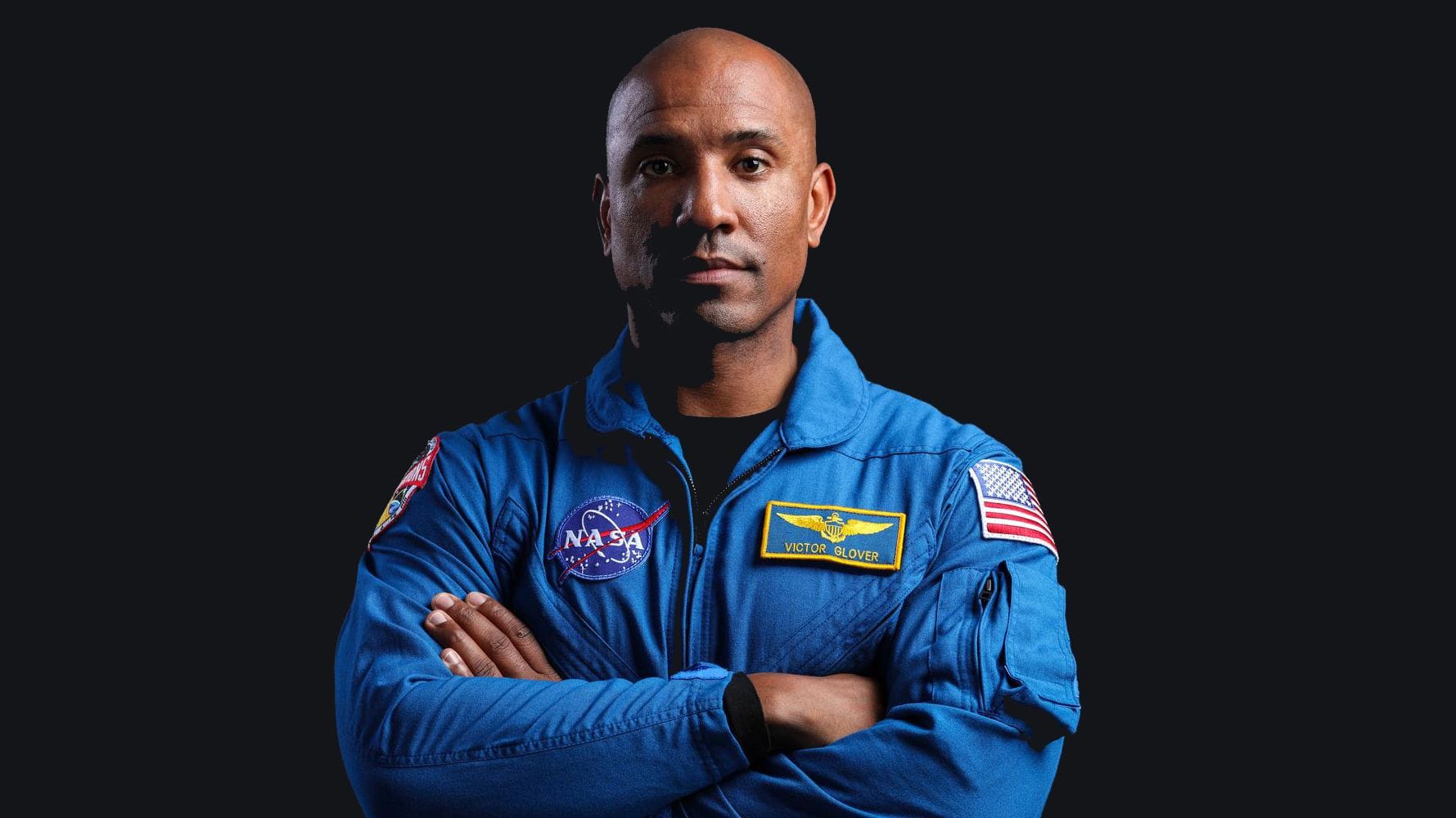
Today four astronauts are flying around the moon for the first time in over fifty years. One of them brought his Bible. On the Monday after Easter, that is worth more than a passing glance.
The airman was alone in enemy territory on Holy Saturday. He did not know Sunday was coming. And when he finally had the chance to say something — the first thing, the true thing — he said: God is good.
That is the life that follows Easter. Not a feeling. A declaration. Not contingent on rescue. True before it, true during it, true after it.
Carry that into the week.
Learn more about The Guardians' Cross → theguardianscross.org