THE MOMENT
The power struggle between the states and the federal government is as old as the Constitution itself. But in 2026 that struggle has become particularly fraught — with federal funding being wielded as a tool to expand central authority and states pushing back through legislation, litigation, and open resistance.
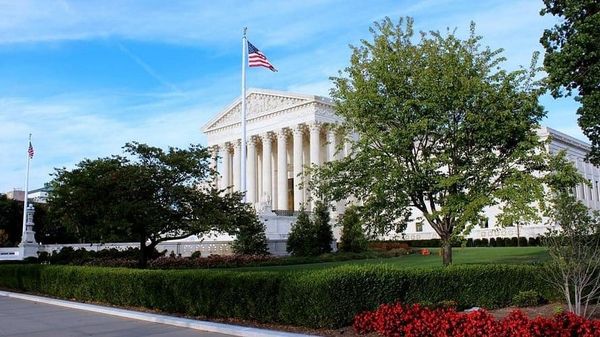
Americans are increasingly looking to state law to constrain abuses of power by the federal government. Illinois passed the Illinois Bivens Act, becoming the fifth state to provide a state civil remedy against federal officials for constitutional violations. Minnesota, Oregon, and Illinois have all become flashpoints in disputes over where federal authority ends and state authority begins.
Most Americans are watching this as political theater — picking sides based on which party controls which government at which level. That is the wrong frame entirely.
What they are watching — whether they know it or not — is the founders' system doing exactly what the founders built it to do. The question worth asking on the 250th anniversary is not which side is winning. It is whether Americans still understand why the system was designed this way in the first place.
THE STORY
The word the founders used for what they were building was not "centralized." It was not "national." It was "federal" — from the Latin foedus, meaning covenant. A federal system is a covenant system — an agreement among distinct, sovereign parties to share certain powers for certain purposes while retaining everything else for themselves.
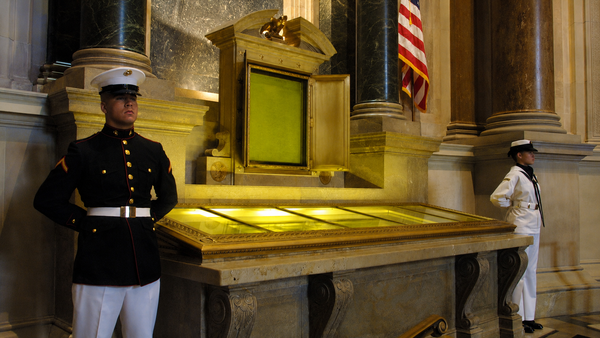
The founders were precise about what they were sharing and what they were keeping. Article I of the Constitution enumerates the specific powers granted to Congress — and the list is deliberately short. The Tenth Amendment closes the architecture with a statement of principle that could not be clearer: "The powers not delegated to the United States by the Constitution, nor prohibited by it to the States, are reserved to the States respectively, or to the people."
Not to the federal government. To the states — and to the people.
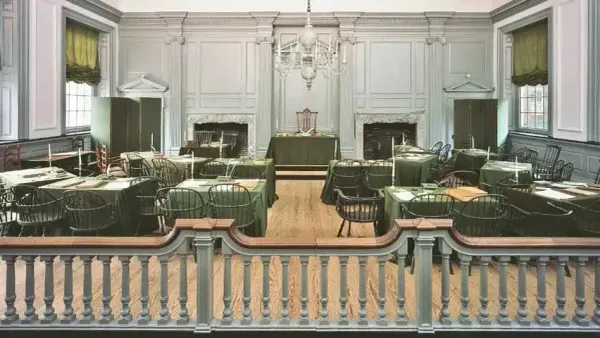
This was not an afterthought. It was the founders' most deliberate design decision. They had lived under a distant central authority that made decisions affecting their daily lives without their meaningful participation. They had fought a war to end that arrangement. And they had no intention of recreating it in Philadelphia.
The conflict over federal power in 2026 has prompted observers to note that given the GOP's historic emphasis on states' rights, it is notable how expansive the current administration's stance is on national prerogatives — and that if the expansion of executive power and national authority continues, it could fundamentally reshape federal-state relations.
What those observers are describing is not a new problem. It is an old one — the permanent tension between centralization and self-governance that the founders built into the system precisely because they knew it would never go away.
WHAT IT REVEALS
The founders kept power close to the people for a reason that goes deeper than political preference. It goes to the question of formation.
James Madison argued in Federalist No. 46 that the states and the federal government would be in constant competition for the loyalty of the people — and that the people's natural affinity would be with the governments closest to them. The local alderman. The state legislator. The county sheriff. These were the officials the people knew, could hold accountable, and could remove. The federal government, distant and abstract, would always struggle to command the same loyalty — and should, Madison argued, be designed with that limitation in mind.
This is federalism as a formation philosophy. The founders understood that self-governance is not a spectator sport. It is a practice — something citizens develop through actual participation in the decisions that affect their actual lives. A republic of people who only relate to government at the federal level is not a republic of self-governing citizens. It is a republic of spectators, watching distant officials make decisions they have no meaningful role in shaping.
The closer power is to the people, the more the people are required to exercise it. School boards. City councils. County commissioners. State legislatures. These are the institutions where citizens actually learn to govern — where the gap between what they want and what their neighbors want has to be negotiated in real time, face to face, with people they will see again at the grocery store. That friction is not a flaw in the system. It is the system. It is where formation happens.
When power consolidates at the federal level, that formation disappears. Citizens stop governing and start watching. They stop participating and start petitioning. They become subjects of a distant authority rather than members of a self-governing community. The founders knew this. It is why they built the architecture they did.
THE FRAME
There is a theological thread running through the founders' federalism that is rarely named but impossible to miss once you see it.
The Hebrew political tradition — which shaped the Puritan founders of New England more than any other single source — was organized around local self-governance under God. The nation of Israel was not a centralized monarchy by design. It was a federation of tribes, each with its own territory, its own leaders, and its own accountability to the same law. The centralized monarchy came later, and the prophets — from Samuel onward — warned against it. Power concentrated in a single human authority, the Hebrew tradition insisted, was an invitation to idolatry: the worship of human sovereignty in place of divine.
The founders were not building a theocracy. But they were drawing on a tradition that understood, at a level deeper than political theory, why concentrated power is dangerous — not merely because it is inefficient or unfair, but because it displaces the accountability structure that keeps human ambition in check.
Subsidiarity — the principle that decisions should be made at the lowest level of authority capable of making them — is not a conservative talking point. It is a theological conviction about the proper ordering of human society. It says: the family before the state, the community before the county, the county before the federal government. Not because higher authorities are unnecessary, but because lower authorities are where persons are actually formed.
The founders built that principle into the constitutional architecture. Federalism is subsidiarity in legal form.
WHAT IT ASKS
Thirty-one days from now America turns 250. The fights between Washington and the states that are filling the news right now are not going to be resolved before then. They may not be resolved in our lifetimes.
But here is what the founders would want Americans to understand about those fights: they are not primarily a federal problem. They are a civic problem. The federal government has expanded because the states have allowed it — because citizens have been content to look upward for solutions rather than inward and outward to the governments closest to them.
Federalism's influence on American government, culture, and society is pervasive and profound — yet often unexplored. That unexplored quality is the problem. A citizenry that does not understand federalism cannot use it. And a constitutional tool that citizens do not use will eventually be taken away.
The ask is not to pick a side in the federal-state battles currently in the news. It is to do something more fundamental: participate in the level of government closest to you. Attend a city council meeting. Know your state representative's name. Understand what your county commissioner actually controls. Vote in local elections with the same attention you bring to presidential ones.
That is not a small ask. In a culture that has nationalized everything — including its politics — it requires a deliberate reorientation. But it is the reorientation the founders designed the system to produce. And it is the only one that will restore what has been lost.
The founders kept power close to you on purpose. The question is whether you will pick it up.
FURTHER READING
Federalist No. 46 — James Madison. The definitive case for why the states, not the federal government, are the natural home of political loyalty — and the design logic behind federalism.
Democracy in America — Volume II — Alexis de Tocqueville. The most perceptive outside analysis of American federalism ever written — and a warning about what happens when local self-governance atrophies.
THE GUARDIAN'S LENS
The founders did not build a federal system because they were sentimental about local government. They built it because they understood that self-governance is a practice — something citizens develop by actually exercising it, at the level of government close enough to hold accountable and small enough to influence. When power consolidates at the top, that practice disappears and citizens become spectators. The fights between Washington and the states that are filling the news right now are the founders' design working as intended — the question is whether the citizens watching those fights understand their own role in them well enough to play it. Thirty-one days.
Learn more at theguardianscross.org.
About The Guardians' Cross The Guardians' Cross is a formation and cultural engagement ministry helping Americans reclaim their identity, their nation, and their destiny. We publish The American Guardian three times a week — analysis that goes deeper than the headlines. If the ideas in this article resonate, there is more at theguardianscross.org.