The Week That Asked Something of You
The Crucible | Issue 10 | Saturday, March 14, 2026 | The Commission
– 3 min read


The Crucible | Issue 10 | Saturday, March 14, 2026 | The Commission
This was a week that asked something of you. Not loudly. Not with a headline or a crisis. Just the steady, daily pressure that comes with living with conviction in a culture that would prefer you didn't. You were asked to stand where you are. To carry what you believe into the rooms you actually occupy. To show up faithfully when no one was taking notes. Whether you did it perfectly isn't the question. The question this week closes on is simpler: did you show up? Because showing up — again, and again, and again — is the whole thing.
This week's arc was a simple declaration: the formed life is not a private matter.
Monday opened with a signal the culture didn't intend to send — when media outlets trained their cameras on formed Christians, they inadvertently confirmed that formed Christians are becoming impossible to ignore. The instinct to label, to contain, to frame faith as a threat to civic life only makes sense if faith in civic life is actually doing something. The surveillance is the evidence.
Thursday pushed into the formation question through the story of Coach Joe Kennedy — a man who made a quiet personal commitment after every game, kept it for seven years under sustained institutional pressure, and changed the legal landscape for every public employee of faith in America. Not because he was a hero. Because he refused to move. Kennedy's story is the living version of what it costs to carry your faith into the open — and what it produces when you do.
Then, at the end of the week, a story out of a small town in Georgia said everything that needed to be said without trying to say anything at all. A man who lived his faith into a school, a coaching staff, a family, and five teenagers on a rainy Friday night — and whose family, in the worst moment imaginable, responded with something the culture doesn't have a category for. Not performance. Not announcement. Just fruit. The fruit of a life formed quietly over years, worked outward into every corner of the world he occupied.
That is the week. That is the arc. That is the answer.
The formed life doesn't need an audience to be real. It needs consistency. What you practice in the ordinary days is what you will draw from in the extraordinary ones. This week showed you both ends of that truth — the man the culture is watching because he refused to pray in hiding, and the man no one outside Gainesville had ever heard of, whose faithfulness left a mark that will last for decades.
Both matter. Both are needed. The question is which one you are building toward right now.
Friday's featured article looks at Jason Hughes — a Georgia teacher who died in a prank gone wrong — and what his family's response revealed about the only kind of formation that actually holds.
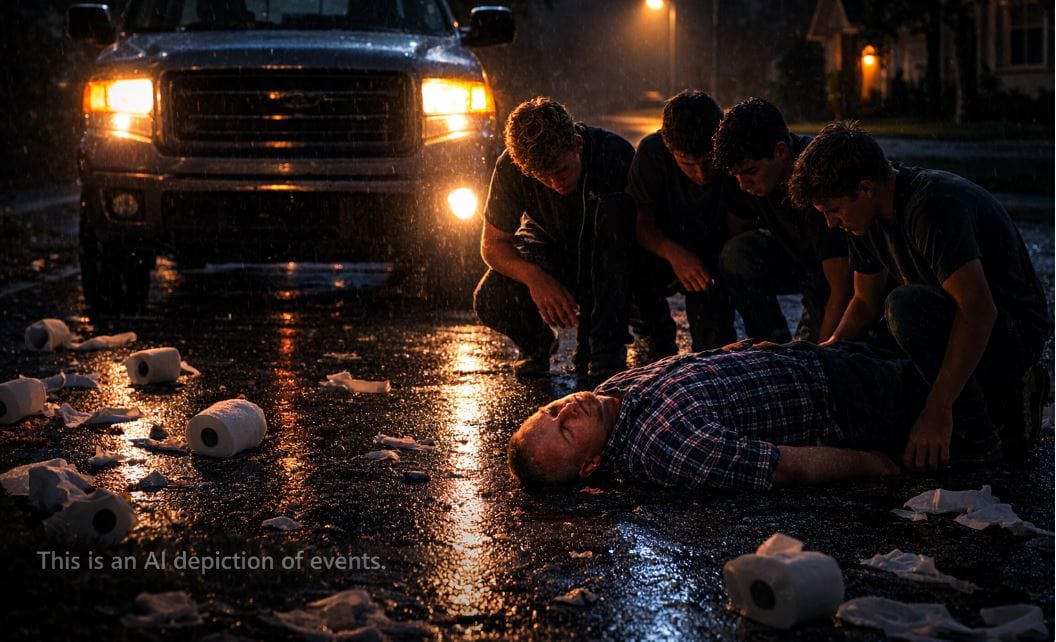
What a Georgia teacher left behind wasn't in his lesson plans. It was in how his family responded when the worst night of their lives became the most public.
Guardian, here are your orders for the week ahead.
Go back into your sphere. Not with a strategy. Not with a talking point. With the quiet, deliberate intention of a person who knows who they are and has decided to show up fully — in their home, their work, their neighborhood, their community — regardless of who is watching.
The week ahead will ask something of you. It always does. The question is whether the reserves are there when it does.
Build them now. In the ordinary. In the unremarkable. In the Tuesday morning and the Thursday evening and the moment no one will ever record.
That is the only formation that holds.
Carry the Cross.
Learn more about The Guardians' Cross → theguardianscross.org