The Crucible | Now Carry It
Issue 40 | Saturday, May 23, 2026 | The Commission
– 4 min read

Issue 40 | Saturday, May 23, 2026 | The Commission
On Tuesday, we named the creation order lie at the center of the Texas Children's Hospital settlement. The body was made — not assembled, not invented, not raw material for self-determination. It bears a design that precedes culture, precedes preference, and precedes whatever a person feels about it on any given day. The lie that denied that design moved through academic medicine, through hospital ethics boards, through pediatric wards — and last week a $10 million settlement acknowledged what a biblical anthropology already knew: the design reasserts itself. The lie always has a cost.
On Thursday, we went to a man who spent fifty-seven years living out the opposite premise. Dr. Paul Brand did not wait for the culture to validate what Psalm 139 already said. He chose leprosy patients in India over prestigious surgical appointments in London. He studied hands his colleagues had written off because he believed he was looking at something made, not random. He rebuilt grip — literally — in people the world had already discarded. His life was not a position paper. It was a proof.
Now it is Saturday. The Commission issue is not a summary. It is a charge.
This week's arc gave you three things.
A frame. The body is a trust, not a project. It was made by someone else, for purposes larger than personal preference, and it will be resurrected — this body, not a replacement — on the other side of death. That frame is not a talking point. It is a lens. Once you see the cultural conversation about the body through that lens, you cannot unsee it. The next time someone in your orbit reduces this argument to politics, you will know what they are missing — and you will have the language to name it.
A model. Brand did not hold his conviction theoretically. He carried it into the operating room, into the leprosy colony, into the hands of patients the world had written off. The conviction had weight because it produced work. Formation that does not produce work is not formation — it is information. Brand is the difference between the two.
A commission. You know what the body is. You know what it is for. You know what it costs to hold that line clearly and without contempt. The question the Commission issue always ends with is the same: what are you going to do with what you now know?
Three specific commissions. Take one. Take all three. But do not close this issue and return to the week unchanged.
One: Name the deeper thing. The next time the Texas Children's settlement — or any story like it — comes up in your world, do not let it be sorted into politics. Name the creation order frame. Not as a lecture. Not as an argument. As a clarification. This is not primarily a political story. It is a story about what the body is. Say that. See what it opens.
Two: Give someone Brand. Fearfully and Wonderfully Made is one of the most accessible entry points into a biblical anthropology of the body that exists in Protestant literature. If you know a physician, a nurse, a medical student, a parent navigating this cultural moment with their children — put the book in front of them. Not as a corrective. As a gift. The conviction is transferable. Transfer it.
Three: Take stock of your own posture. This week's arc asked a formation question that goes beyond the Texas Children's settlement: does the proposition that the body was made by God have weight in how you actually live? Does it shape how you treat your own body — in rest, in discipline, in what you consume and what you refuse? Does it shape how you treat the bodies of the people around you — in how you see them, speak about them, serve them? Brand's life was the proposition made visible. The commission is to close the gap between what you now know and how you actually live.
Sunday is the reset. The room you walk into this week — your workplace, your household, your neighborhood, your arena — does not know what you now know. The formed believer does not walk into that room waiting for permission to speak. They walk in already carrying the conviction, already prepared for the moment when the conversation arrives, already decided about what they will say and what they will not concede.
The arc is complete. The week is ahead.
Carry it in.
Formation is not finished when you close the issue. It is finished when the conviction changes the way you move through the week. One room. One conversation. One moment where you name the deeper thing instead of letting it pass. That is the standard. Hold it.
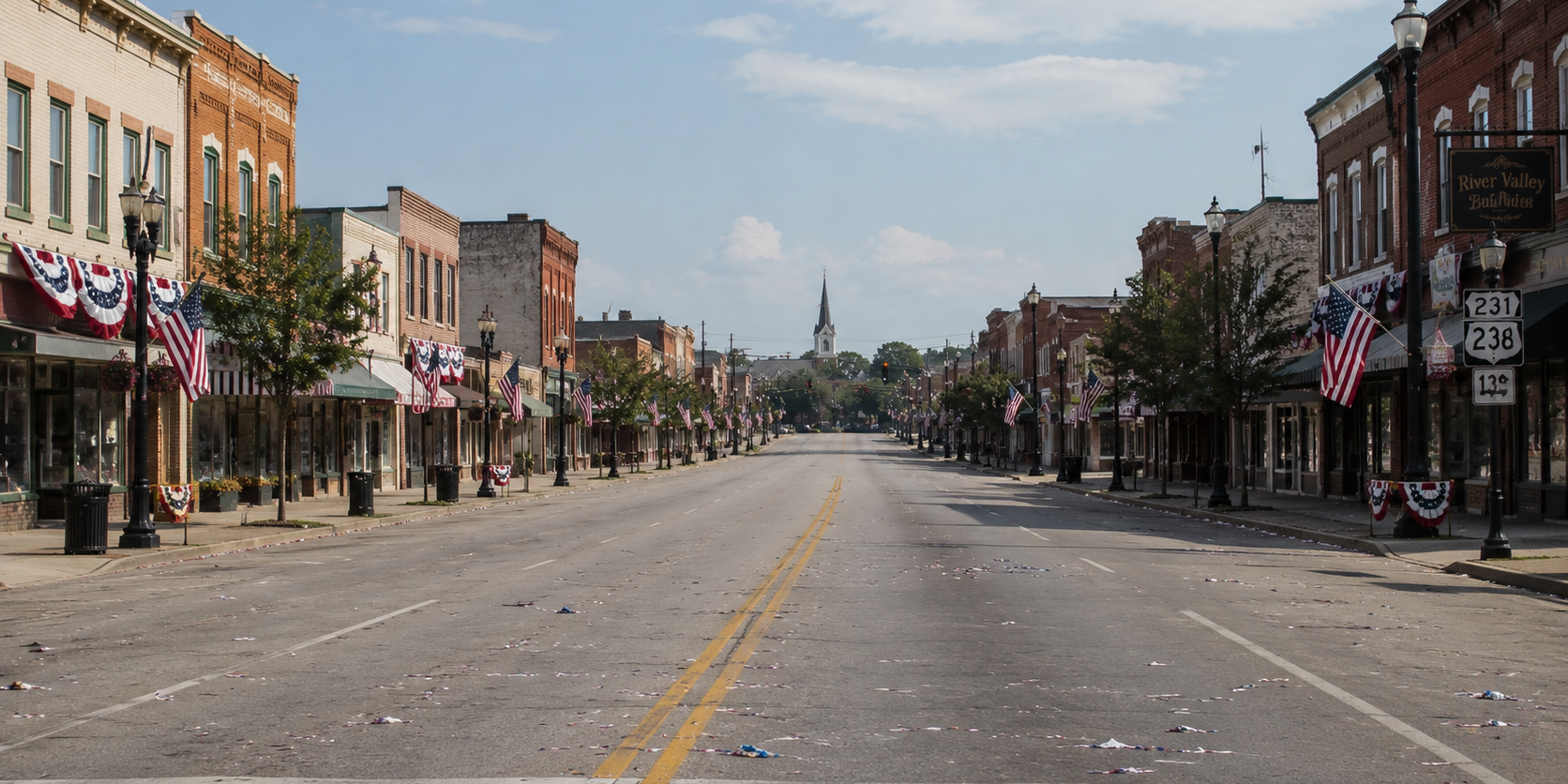
Yesterday's issue — 250 Years. Do We Still Know What We're Celebrating? — made the same argument this week's arc made, from a different angle. The Declaration of Independence does not grant rights. It recognizes them — as endowed by a Creator, pre-political and pre-governmental, beyond the reach of any institution that did not give them. The Texas Children's settlement and the founding document of the American republic rest on the same load-bearing claim: there is a design that precedes the state, and the state has no authority to override it. In 43 days America turns 250. Read it before the fireworks. Read it at theguardianscross.org.
Fearfully and Wonderfully Made — Paul Brand & Philip Yancey (1980). The book to give. A surgeon's testimony that the body's complexity is the argument for its Maker.
Irreversible Damage — Abigail Shrier (2020). The documented account of how the ideology moved through institutions. The book for the person in your life who needs evidence, not theology.
The Body Keeps the Score — Bessel van der Kolk (2014). Not a Christian text — but a secular psychiatrist's documentation that the body carries what the mind denies. The design reasserts itself even in the secular literature. Useful for the conversation that starts from a non-theological starting point.
The body was made. The lie is losing. The settlement is the receipt.
But the arc does not end in the news cycle. It ends in the room you walk into Monday morning — with a conviction that is no longer theoretical, carried by a person who is no longer waiting for permission.
You know what the body is. You know who made it. You know what it is for.
Now carry it.
The Guardians' Cross is a Christian formation and cultural engagement ministry — equipping believers to carry their faith into every room and every arena. Learn more → theguardianscross.org