THE MOMENT
Nineteen days from now America turns 250. The celebrations will be large, genuine, and largely uncomplicated. Flags. Fireworks. Speeches about liberty and progress and the long arc of justice bending in the right direction.
What the celebrations will almost certainly not include is the honest reckoning that the republic has required, at every critical moment in its history, to survive.
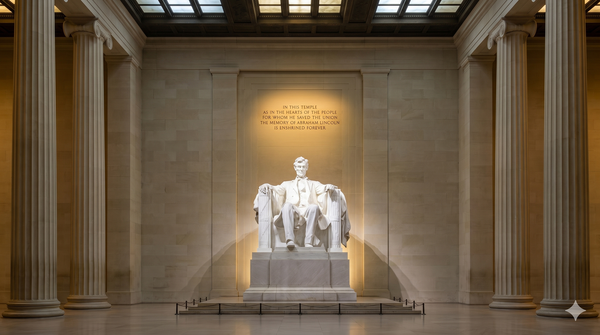
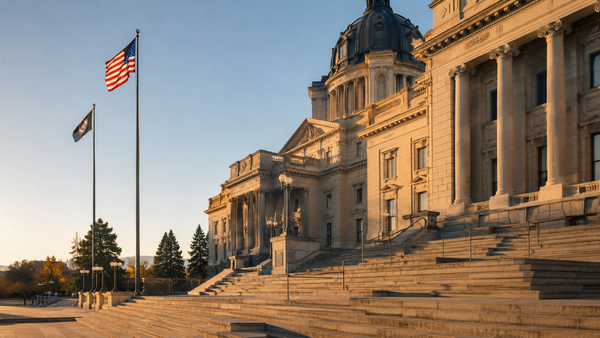
On March 4, 1865 — one month before the Confederate Army surrendered at Appomattox — Abraham Lincoln stood on the East Portico of the United States Capitol and delivered 703 words that Frederick Douglass, who was present, called "a sacred effort." It is a peerless work of political theology — in 703 words, Lincoln summarized the moral dilemma of slavery in American history and the four-year conflict it caused. In a few words, he looked back at America's original sin as he looked forward to the Union's restoration.
It remains the most honest thing any president has ever said from a podium. And it is the piece of American history most worth understanding before July 4th arrives.
THE STORY
The Second Inaugural was not the speech anyone expected. The war was nearly won. The crowds who gathered that March — an estimated 30,000 to 40,000, standing in rain and fierce wind — expected a victory address. A celebration of Northern resolve. A reckoning with Southern treason.
Lincoln gave them none of that.
With the words "Both read the same Bible, and pray to the same God; and each invokes His aid against the other," Lincoln brought God to the rhetorical center of the address. In quick strokes he described God's actions: "He now wills to remove"; "He gives to both North and South this terrible war"; "Yet, if God wills that it continue."
Lincoln did not say "Southern slavery" — he asserted that North and South must together own the offense. Both were responsible for 250 years of slavery. Having to repay that debt, the "toil shall be sunk" — an accounting term. Lincoln carried the scales of justice to his speech. He did so knowing that Americans had always been uncomfortable facing up to their own malevolence. Lincoln suggested that the war was a means of purging the nation of its sin.
He then closed — not with triumph, not with vengeance, but with one of the most demanding sentences ever spoken by a political leader: "With malice toward none, with charity for all, with firmness in the right as God gives us to see the right, let us strive on to finish the work we are in, to bind up the nation's wounds."
The crowd that had come for a victory speech received a theology lesson. And a charge.
WHAT IT REVEALS
A feature that sets the Second Inaugural apart is its biblical and theological language. Lincoln addressed the nation's relationship to God at great depth — quoting Scripture, invoking divine providence, and framing the war not as a political conflict between competing interests but as a moral judgment on a nation that had permitted what it knew to be wrong.
This is Lincoln at his most precise — and most relevant to 2026. He was not doing what politicians typically do with religion: invoking God's blessing on their preferred side and their preferred outcome. He was doing something far more uncomfortable. He was placing both sides under divine judgment. He was saying: this war is not primarily about you. It is about whether this republic will live up to what it declared in 1776 — that all men are created equal and endowed by their Creator with unalienable rights. A nation that declared that truth and then permitted the enslavement of human beings for 87 years had accumulated a debt. The war was the payment.
Lincoln brought God to the rhetorical center of the address — not as a partisan ally but as a sovereign judge whose purposes transcend any nation's preferences or plans. "The Almighty has His own purposes." That sentence alone disqualifies the Second Inaugural from any reading that tries to make Lincoln a simple nationalist or a progressive icon. He was neither. He was a man who had read the Bible carefully enough to understand that nations, like persons, are accountable to something above themselves — and that the accounting, when it comes, is not always what the accountable party expected.
The founding premise — rights endowed by a Creator — had always carried this implication. If the Creator endows all men with rights, then a republic that claims those rights for some while denying them to others is not merely unjust. It is in rebellion against the moral order it claims to represent. Lincoln named that rebellion. He named it as belonging to the whole nation, not just the South. And he named the war as the consequence.
THE FRAME
What makes the Second Inaugural the most important speech in American history — more important, in some respects, than the Declaration itself — is that it demonstrates something the Declaration only implies: that the founding premises have teeth.
The Declaration said all men are created equal. The Constitution permitted slavery. The republic lived in that contradiction for 87 years, accumulating the debt Lincoln described. When the debt came due, it cost 600,000 lives.
That is not a reason to despair about America. It is a reason to take America seriously. The founding claims are not decorative language. They are moral commitments that carry real consequences when violated. A nation that declares human equality and then organizes itself around human inequality will eventually face the reckoning that Lincoln was describing from the Capitol steps.
This is why the Second Inaugural matters for the 250th anniversary. Not because it is a story of failure. Because it is a story of return — of a republic that had drifted catastrophically from its founding premises, paid a devastating price for that drift, and was called, by its greatest leader at its darkest moment, back to what it had always claimed to be.
Frederick Douglass called it "a sacred effort." With its biblical allusions, its parallel structure, its reliance on one-syllable words, the address has the power of a sermon. It incorporates the themes of the religious revivals Lincoln had absorbed: sin, sacrifice, and redemption.
Sin. Sacrifice. Redemption. Those are not political categories. They are theological ones. Lincoln used them deliberately — because he understood that the crisis the republic faced in 1865 was not primarily political. It was moral. And moral crises require moral language to name them honestly.
WHAT IT ASKS
Nineteen days from now the fireworks will go up. The republic Lincoln saved — imperfectly, at enormous cost, by calling it back to its founding premises — will be 250 years old.
Before that day arrives, read the Second Inaugural. All 703 words. It takes four minutes. Read it as what it is: the most honest accounting any American leader has ever given of what this republic actually is, what it has actually done, and what it is actually required to be.
Then ask yourself whether the honesty Lincoln modeled — the willingness to say plainly that we have sinned, that we will pay, and that we must press on with malice toward none and firmness in the right — is a feature of your own civic life. Whether you are willing to hold the founding's claims with the same seriousness Lincoln held them: not as inspirational phrases but as moral commitments that carry real consequences.
The republic returns to its founding premises every generation or it drifts from them. The Civil War was the most catastrophic drift in American history. The Second Inaugural was the call back. Every generation since has had its own version of that call — and its own decision about whether to answer it.
Nineteen days.
FURTHER READING
Lincoln's Second Inaugural Address — Full Text — Yale Avalon Project. 703 words. Read them before July 4th.
Lincoln's Greatest Speech: The Second Inaugural — Ronald C. White Jr. The definitive analysis of the speech — its biblical sources, its rhetorical structure, and its theological depth.
THE GUARDIAN'S LENS
Abraham Lincoln stood before a nation that wanted a victory speech and gave it a theology lesson instead. He told the North it shared the guilt. He told the South it had not sinned alone. He placed both under the judgment of a God whose purposes transcend any nation's preferences. And then he called the entire republic — with malice toward none — back to what it had declared itself to be in 1776. That is what honest reckoning looks like. It does not excuse. It does not despair. It names the truth, accepts the cost, and presses on toward what is right. Nineteen days from now America turns 250. The question Lincoln's speech leaves on the table is whether we still know how to reckon honestly — with our history, with our failures, and with the founding premises that make the celebration worth having.
Learn more at theguardianscross.org.
About The Guardians' Cross
The Guardians' Cross is a formation and cultural engagement ministry helping Americans reclaim their identity, their nation, and their destiny. We publish The American Guardian three times a week — analysis that goes deeper than the headlines. If the ideas in this article resonate, there is more at theguardianscross.org.