The Crucible | The Man Who Formed the Founders
Issue 45 | Thursday, June 4, 2026 | The Formation Forge
– 6 min read

Issue 45 | Thursday, June 4, 2026 | The Formation Forge
On Tuesday we named the posture: the open hand. Not passive. Not disengaged. Working — but not gripping. Trusting the outcome to Someone who is not you.
Today we go to a man who lived that posture for thirty years in a college classroom in New Jersey — and whose open-handed faithfulness shaped the men who wrote the Constitution.
He did not build the Republic. He formed the people who did. That is a different thing. And it is the more important one.
Virtue: Faithful Presence
John Witherspoon was born in Gifford, Scotland, in 1723 — the son of a Presbyterian minister, formed from childhood in a tradition that took seriously both the sovereignty of God and the responsibilities of the people who lived under it. He was educated at Edinburgh, ordained as a minister, and spent the first two decades of his ministry in Scotland — preaching, writing, and building a reputation as one of the most able clergy in the Scottish Presbyterian church.
In 1768, against his initial instincts and his wife's considerable reluctance, he accepted an invitation to become the president of the College of New Jersey — what would later become Princeton University. He was forty-five years old. He crossed an ocean to take a post at a struggling colonial college he had never seen, in a country he had never visited, to teach students he did not yet know.
He would spend the next twenty-six years there. He would never go home.
Witherspoon arrived at Princeton and immediately set about doing what he had always done: teaching. Not inspiring — teaching. There is a difference. Inspiration produces feeling. Teaching produces formation. Witherspoon was interested in formation.
He taught moral philosophy, history, rhetoric, and what he called the science of government. He brought the Scottish Enlightenment's rigor and the Reformed tradition's theological realism into the same classroom and produced graduates who could think — clearly, carefully, and from a framework that understood both human nature and the principles of ordered liberty.
The list of his students reads like a founding document of the American republic. James Madison — the primary architect of the Constitution and the Bill of Rights. Aaron Burr. Philip Freneau. Hugh Henry Brackenridge. Witherspoon trained nine of the men who signed the Declaration of Independence, five delegates to the Constitutional Convention, forty-nine U.S. representatives, twenty-eight senators, and three Supreme Court justices. He did all of that in a classroom. One lecture at a time. One student at a time. For twenty-six years.
He was also the only clergyman to sign the Declaration of Independence — a fact worth pausing on. When the moment came to put his name to a document that could result in his execution, he did not hesitate. He reportedly told those who argued the colonies were not yet ready for independence: "In my judgment, sir, we are not only ripe for the measure, but in danger of rotting for the want of it."
The conviction was settled. The cost was counted. He signed.
Witherspoon understood something about formation that the clenched-fist posture always misses: that the outcomes you are trying to grip are almost always produced upstream, in rooms that do not look like the rooms where history is made.
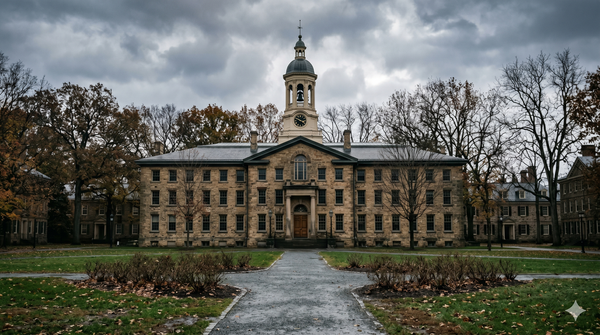
Madison did not become the architect of the Constitution in Philadelphia. He became the architect of the Constitution in Princeton — sitting in Witherspoon's classroom, absorbing a framework for understanding human nature, power, and the design of institutions that he would apply twenty years later in the most consequential political document since the Magna Carta. The work happened at the local level, in an ordinary academic building, between a teacher and a student, long before anyone knew what it would produce.
This is the Wednesday Guardian piece applied to formation: the founders kept power close to the people because self-governance is a practice. Witherspoon understood that the practice begins in the classroom, in the family, in the church — in the institutions closest to the person, where formation actually happens. A republic of citizens who cannot think, who have not been formed, who do not understand the principles of ordered liberty, is not a republic for long. Witherspoon knew that. He spent his life doing something about it.
His hands were open. He planted. He taught. He trusted the outcome to what would grow from what he was putting into the ground.
He never saw most of what grew. He died in 1794, blind in his final years, having outlived two of his sons who died in the Revolutionary War. The Constitution had been ratified. The Bill of Rights had been passed. Madison was serving in Congress. But the fuller fruit of what Witherspoon planted was still decades away.
He did not grip for it. He planted and trusted.
Witherspoon gave Scotland. He gave the career trajectory he had built at home, the familiar church, the country where he knew how to navigate the institutions and the culture. He gave his sons — two of them died in the war his teaching helped make possible. He gave his eyesight in his final years, continuing to lecture from memory when he could no longer read.
The cost was not dramatic in the way that signing the Declaration was dramatic. It was quiet and cumulative — the daily cost of faithful presence in an ordinary room, teaching ordinary students, trusting that what was being planted was worth more than what it was costing.
It was. The planting produced a republic. The republic produced a Constitution. The Constitution produced the most durable framework for self-governance in human history.
Witherspoon did not do any of that. He taught James Madison. That was enough.
The line from Witherspoon's classroom to the Constitution is not metaphorical. It is traceable, documented, direct. Madison absorbed Witherspoon's framework for understanding the separation of powers, the nature of factions, and the necessity of institutional constraints on fallen human beings — and applied it with precision in Philadelphia in 1787.
When Madison wrote in Federalist No. 51 that if men were angels no government would be necessary, he was writing from a theological anthropology he had received in a Presbyterian classroom in New Jersey twenty years earlier. The architecture of the American republic has Witherspoon's fingerprints on it — not because he designed it, but because he formed the man who did.
That is what faithful presence produces. Not the outcome you can see from where you are standing. The outcome that grows from what you planted in the room in front of you — thirty years from now, in a city you will never visit, through a person who carries what you gave them into a moment you will never witness.
Open hands. Faithful work. Trust the harvest to God.
The open hand does not mean passive. It means faithful presence in the room in front of you — teaching, forming, planting — without gripping for the outcome. Witherspoon did not know he was forming the architect of the Constitution. He knew he was responsible for the students in his classroom. That was enough. The formation question for this week: what room are you faithfully present in? What are you planting there? Are your hands open enough to trust what grows?
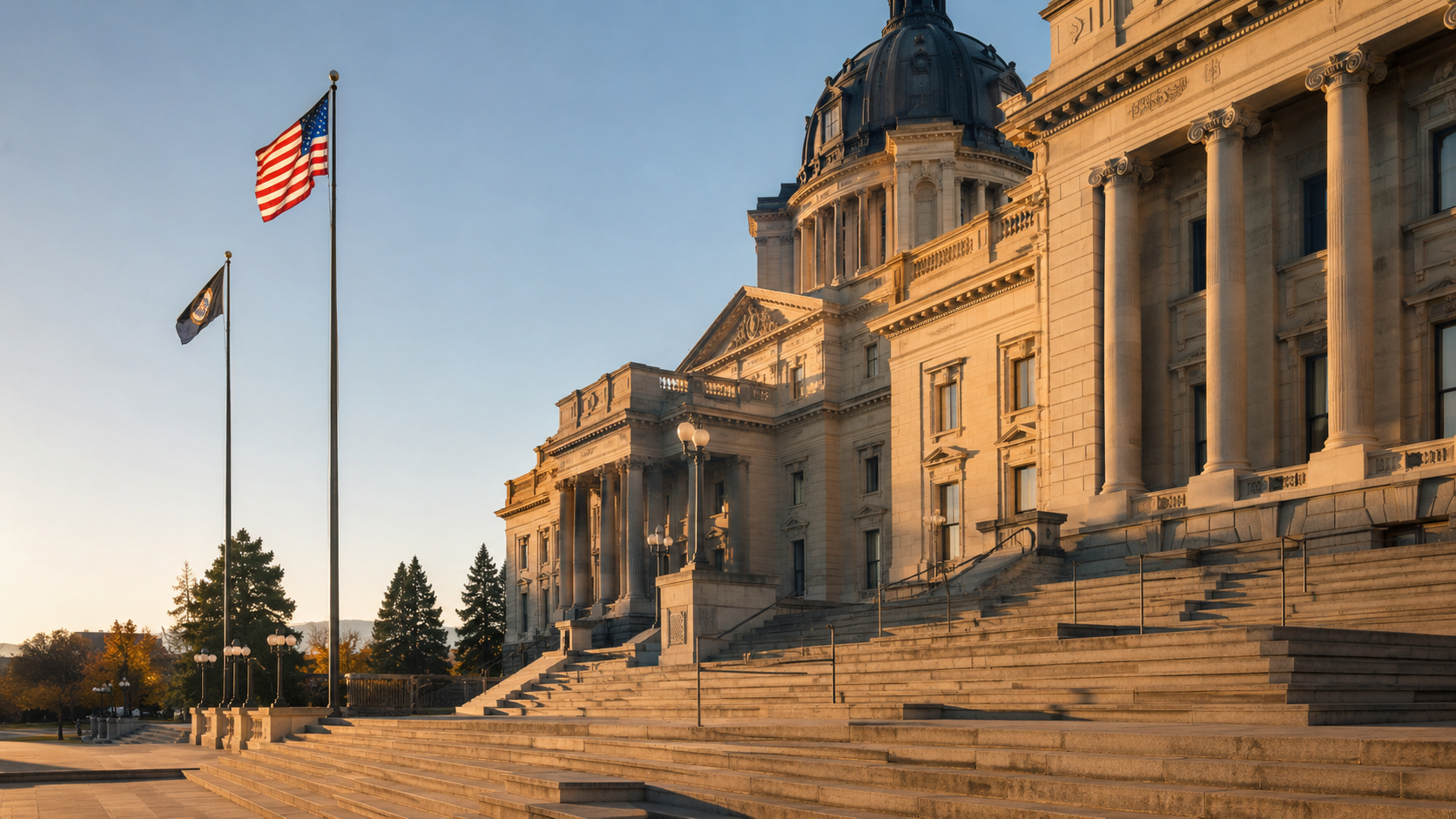
Today's issue — The Founders Kept Power Close to You on Purpose — makes the case that federalism is subsidiarity in legal form: the founders kept authority at the lowest possible level because self-governance is a practice developed through actual participation, not a spectator sport. Witherspoon is that principle made flesh. He kept his work at the local level — one classroom, one student, one year at a time — and the republic grew from it. The founders kept power close to the people on purpose. Witherspoon kept formation close to the person on purpose.
Read it at theguardianscross.org.
John Witherspoon and the Founding of the American Republic — Jeffry Morrison (2005). The definitive treatment of Witherspoon's influence on Madison and the constitutional design. Carefully sourced and readable. Essential for anyone who wants to understand the theological roots of the American republic.
The Lectures on Moral Philosophy — John Witherspoon (modern edition). The course Madison sat in. The framework from which the Constitution was built. Read the source material.
James Madison and the Making of America — Kevin Gutzman (2012). The best single-volume account of Madison's life and work — and the clearest documentation of how Witherspoon's formation shows up in the constitutional design.
Witherspoon crossed an ocean to teach students he had never met, in a country he had never visited, toward outcomes he would never fully see.
He planted. He taught. He trusted.
One of his students wrote the Constitution. Another signed the Declaration beside him. Dozens more built the republic from the inside — in courtrooms, in legislatures, in the rooms where the country was being decided.
Witherspoon did not do any of that. He opened his hands and taught James Madison.
That was enough.
Find your room. Open your hands. Teach what you know. Trust the harvest.
The Guardians' Cross is a Christian formation and cultural engagement ministry — equipping believers to carry their faith into every room and every arena. Learn more → theguardianscross.org