The Crucible | The Republic Doesn't Need Your Nostalgia. It Needs Your Honesty.
Issue 50 | Tuesday, June 16, 2026 | The Cultural Front

– 5 min read


Issue 50 | Tuesday, June 16, 2026 | The Cultural Front
Eighteen days from now, America turns 250.
Two responses are being prepared. The first is uncritical celebration — flags, fireworks, and speeches about the long arc of liberty bending in the right direction. The second is cynical detachment — the posture that says the republic is compromised beyond recovery and the honest response is to disengage.
Both are wrong. And both are failures of formation.
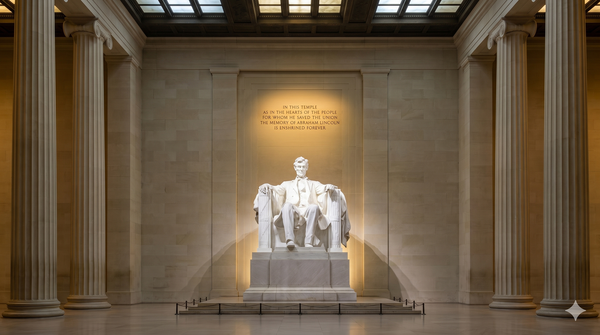
This week's arc is about the third posture. The one the republic has actually required at every critical moment in its history. The one Lincoln modeled on the steps of the Capitol on March 4, 1865, eighteen days before the war ended.
Honest reckoning.
The America 250 moment is bringing out two dominant postures in the Christian public square, and neither of them is adequate to the moment.
The first is the posture of uncritical celebration. This is the version of patriotism that treats the republic's founding as essentially complete, the American story as essentially heroic, and the 250th anniversary as essentially a reason to feel good. It is not wrong to celebrate. But celebration without reckoning is nostalgia — and nostalgia is not a formation virtue. It produces sentimentality, not conviction. It looks at the founding and sees a finished achievement rather than a living obligation.
The second is the posture of cynical detachment. This is the version that begins with legitimate observations about the republic's failures — the gaps between the founding claims and the founding practice, the drift of institutions, the formation crisis — and arrives at the conclusion that the whole project is too compromised to inhabit with hope. This posture presents itself as honesty. It is not. It is despair with intellectual credentials — and despair, however well-sourced, is also not a formation virtue.
The formed believer does neither. The formed believer has a third posture available — one that the republic's greatest leaders have modeled at its darkest moments, and one that the 250th anniversary demands.
Honest reckoning.
Yesterday The American Guardian ran the most important piece in the America 250 series. The subject was Abraham Lincoln's Second Inaugural Address — delivered on March 4, 1865, one month before the Confederate Army surrendered at Appomattox. The crowd that gathered that day — 30,000 to 40,000 people standing in rain and fierce wind — expected a victory speech. A celebration of Northern resolve. A reckoning with Southern treason.
Lincoln gave them none of that.
In 703 words, he did something no American president has done before or since. He placed both sides under the judgment of God. He did not blame the South. He did not celebrate the North. He said both had read the same Bible and prayed to the same God and both had used those prayers to justify positions that could not both be right. He said the Almighty had His own purposes — purposes that transcended any nation's preferences or plans. He said the war was the price of 250 years of slavery that the whole nation had permitted and from which the whole nation had benefited.
And then he closed not with triumph but with one of the most demanding sentences ever spoken by a political leader: With malice toward none, with charity for all, with firmness in the right as God gives us to see the right, let us strive on to finish the work we are in.
Frederick Douglass, who was present, called it "a sacred effort."
That is honest reckoning. Not the reckoning of nostalgia — which only sees what was noble. Not the reckoning of cynicism — which only sees what was corrupt. The reckoning of a person who can hold both at once — who can say this republic sinned, this republic paid, this republic was called back to what it claimed to be, and this republic is still worth the work of pressing toward what is right.
The Second Inaugural is not primarily a history lesson. It is a formation template.
Lincoln modeled something the formed believer needs in 2026 at least as much as the republic needed it in 1865: the willingness to see clearly without retreating into either comfort or despair. To name what is true about a flawed institution you still believe in. To hold the founding's claims seriously enough to be grieved when the republic falls short of them — and committed enough to press on anyway.
He has shown you, O mortal, what is good. And what does the Lord require of you? To act justly and to love mercy and to walk humbly with your God. Micah 6:8.
That is not a verse about celebration. It is not a verse about cynicism. It is a verse about the posture of a person who knows what is true, knows what is required, and is committed to the work regardless of whether the culture around them is ready to receive it.
The formed believer brings that posture to the 250th. Not nostalgia. Not cynicism. Honest reckoning — clear-eyed about what the republic is and has been, committed to what it was built to be, and willing to pay whatever the work of return requires.
The America 250 moment is not asking for your feelings about the republic. It is asking for your honesty.
Lincoln's standard of honest reckoning — both sides under judgment, with malice toward none, firmness in the right — is a standard the formed believer can apply to their own civic life right now. Not to the Civil War. To this week. To the rooms they are actually in. To the conversations they are actually having. To the moment they are actually inhabiting.
Are you willing to see the republic clearly — its founding genius and its founding failures, its historic achievements and its present drift — without retreating into either celebration or despair? Are you willing to hold the founding claims seriously enough that their violation actually grieves you? Are you willing to press on — with malice toward none, with firmness in the right — toward what the republic was built to be?
That is the formation question. Not whether you will attend the celebration. Whether you will inhabit the moment the way Lincoln inhabited his.
The next time the 250th comes up in your orbit — the celebration, the cynicism, the flags, the arguments about whether the republic is worth honoring — name the third posture. Not nostalgia. Not cynicism. Honest reckoning. Lincoln modeled it at the republic's darkest moment. It cost him something. It produced something. The formed believer carries that same posture into every conversation about America this month. Be ready to name it.
Yesterday's issue — The Speech That Told America the Truth About Itself — is the piece that gives this week's arc its anchor. Lincoln's Second Inaugural in full context: the theological depth, the biblical language, the placement of both sides under divine judgment, and the demand — with malice toward none — to press on toward what is right. If you have not read it, read it before Thursday. It is the foundation Thursday's Formation Forge builds on. Read it at theguardianscross.org.
Lincoln's Greatest Speech: The Second Inaugural — Ronald C. White Jr. (2002). The definitive analysis — the biblical sources, the rhetorical structure, the theological depth. Read Monday's Guardian piece first, then this.
With Malice Toward None: The Life of Abraham Lincoln — Stephen B. Oates (1977). The most readable single-volume Lincoln biography. The formation of the man who delivered the Second Inaugural — where the honest reckoning came from.
The Conviction to Lead — Albert Mohler (2012). The framework for understanding why conviction — not inspiration, not charisma — is what produces leaders who can say what Lincoln said on those steps. Formation before platform.
The republic does not need your nostalgia. It has enough of that.
It does not need your cynicism. It is drowning in that too.
What it needs — what it has always needed at its darkest and most critical moments — is the honest reckoning of formed people who can see it clearly, love it seriously, grieve its failures honestly, and press on toward what it was built to be.
Lincoln did that from the steps of the Capitol with 600,000 dead and the war not yet over.
You can do it from wherever you are, eighteen days before the fireworks.
See it clearly. Name it honestly. Press on.