The Crucible | They Convicted Him for John 3:16
Issue 41 | Tuesday, May 26, 2026 | The Cultural Front
– 6 min read

Issue 41 | Tuesday, May 26, 2026 | The Cultural Front
A 78-year-old retired pastor in Northern Ireland was convicted last month of a criminal offense.
He did not threaten anyone. He did not block anyone. He did not mention abortion. It was a Sunday. The clinic he was standing near was closed.
He preached John 3:16. And for that, he now has a criminal record.
This is not a foreign story. It is a preview.
On May 6, 2026, a district judge in Northern Ireland convicted Clive Johnston, a 78-year-old retired pastor, under the Abortion Services (Safe Access Zones) Act. The law creates 100-meter buffer zones around facilities where abortions are performed. Within those zones, it is a criminal offense to do anything that could be seen as "influencing" or "causing harassment, alarm or distress" to anyone seeking abortion services.
Johnston held an open-air Sunday service across the street from Causeway Hospital in Coleraine. He sang with a ukulele. He told his life story. He preached John 3:16. Police body camera footage shows an officer interrupting him mid-sermon, telling him he is in a safe access zone and must stop. Johnston politely refused. He told the officer he was not violating the law because he had made no mention of abortion.
The judge convicted him anyway. Johnston did not mention abortion. The clinic was not open. It was a Sunday. None of that mattered. He was fined £450 — approximately $614 — and now carries a criminal record for preaching the gospel in a public space.
He is appealing. He called it "a dark day for Christian freedom."
He is right. And the implications run further than Northern Ireland.
What Johnston's conviction establishes is not simply that buffer zone laws can be applied broadly. It establishes something more precise and more dangerous: that in Britain, peaceful religious expression can now be criminalized not just for what is actually said, but for views that the listener thinks the speaker might hold.
Johnston did not mention abortion. He was convicted anyway — because the law is broad enough that holding a Sunday service near a designated zone can be deemed "influencing." The subjective standard of harm is now the legal standard. You do not have to say the wrong thing. You simply have to be the kind of person who might.
This is not the first case. Johnston is not an outlier. In Scotland, a 75-year-old grandmother was arrested for carrying a placard outside a hospital that read: "Coercion is a crime. Here to talk, only if you want." In England, Isabel Vaughan-Spruce was criminally charged for praying — silently, in her head — outside an abortion clinic. Three weeks after Johnston's conviction, a second UK pastor, Steve Maile, was arrested in Watford while street preaching — double-handcuffed on the pavement, continuing to quote Scripture to the officers arresting him.
This is a pattern. Not an anomaly.
The instinct when reading stories like this is to treat them as cautionary tales from a country further down the road — interesting, troubling, someone else's problem. That instinct is a mistake.
The legal architecture that produced Johnston's conviction does not require importing British law. It requires only that the underlying logic become normalized: that speech causing subjective distress is harm, that harm justifies restriction, and that religious expression in contested public spaces is presumptively problematic. That logic is already present in American institutions — in university speech codes, in corporate diversity policies, in the reasoning behind social media content moderation, and in the framing of bills currently moving through state legislatures.
Yesterday, Memorial Day, The American Guardian asked whether Americans still know what their soldiers died for. The men and women buried in military cemeteries around the world were not defending a government. They were defending a covenant — one that rests on the premise that rights come from the Creator, not the state, and that no institution on earth has the authority to revoke them. The right to speak the Word of God in a public space is not a privilege extended by a tolerant government. It is an unalienable expression of the conscience the Creator gave to every human being.
Clive Johnston knew that. He stood in the street and preached anyway. He told the officers arresting him: "I have not assaulted anyone. Take these off in the name of Jesus."
The formed believer watches that footage and asks one question: would I have kept preaching?
This arc is called "The Cost of the Word." Not because the cost is new. It has never been free to speak what is true in a room that has decided otherwise. The early church preached in front of the Sanhedrin. Paul preached in front of Caesar. Tyndale translated the Bible into English and was burned for it. The cost of the Word is not a feature of hostile cultures. It is a feature of the Word itself.
For the word of God is living and active, sharper than any two-edged sword — and what is sharp enough to divide soul and spirit, joint and marrow, will always provoke the people who would prefer it stay quiet.
The question the Johnston conviction puts to every formed believer is not political. It is personal: have you counted the cost? Not theoretically — not as an abstract position on religious liberty — but practically. In the rooms you actually occupy. In the conversations you are actually having. In the moments where speaking the truth would cost you something real — a relationship, a reputation, a professional standing, a comfortable silence.
Johnston did not decide in the moment. He had already decided. The arrest did not produce his conviction. His conviction — the one in his chest, not the one in the courtroom — was already there before the officers arrived.
That is what formation produces. Not boldness as a personality trait. Boldness as a settled posture — built before the moment of pressure, so that when the moment comes, the decision has already been made.
The next time you are in a room where speaking the truth would cost you something — do not decide in the moment. Decide now. The formed believer does not improvise their convictions under pressure. They carry them in, already settled, already counted. Johnston's conviction is a verdict on what it costs to speak. The formation question is whether you have already decided the Word is worth it.
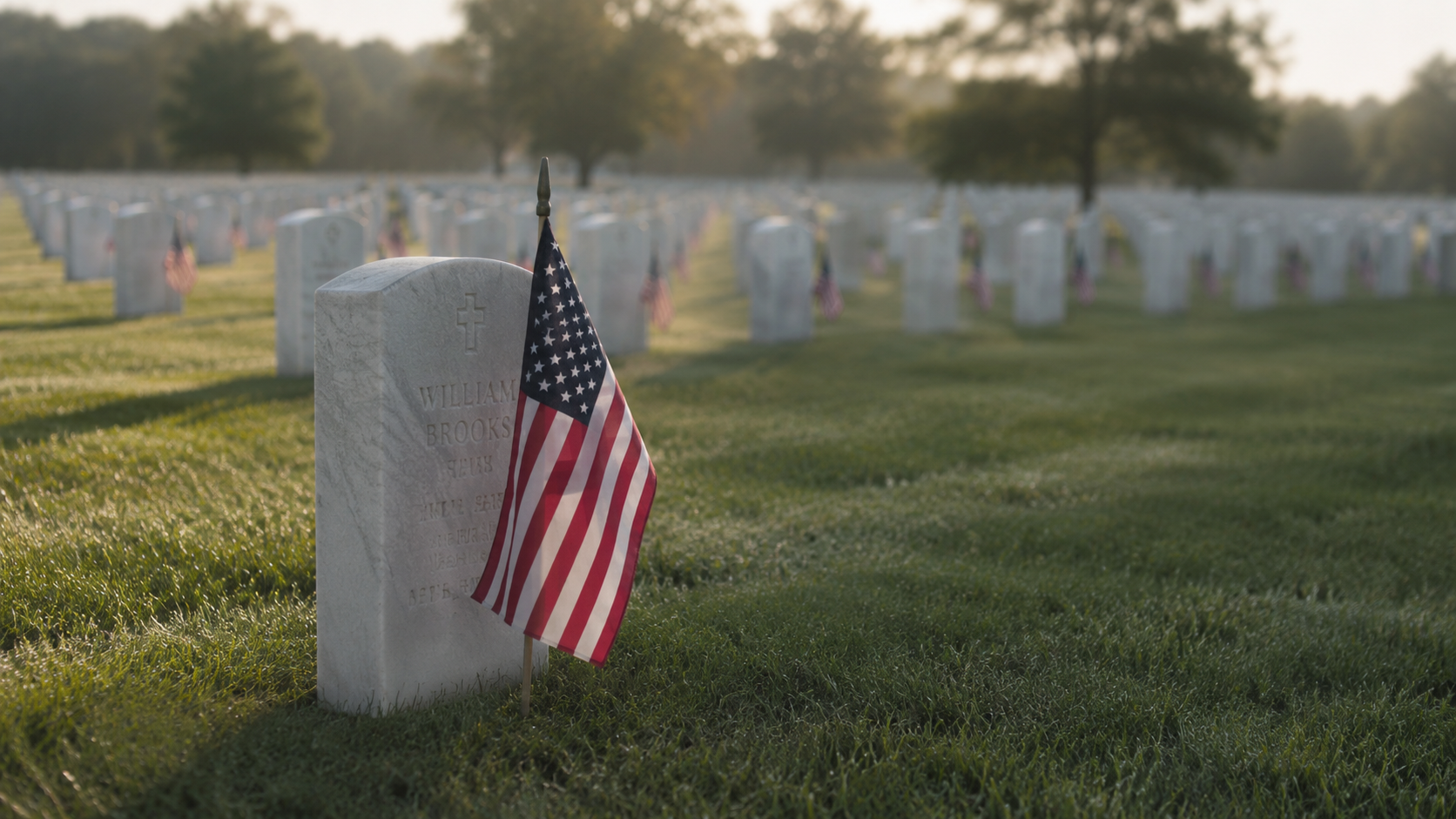
Yesterday's issue — They Didn't Die for a Government. They Died for an Idea. — traced the covenant premise underneath American military sacrifice: 197 words on a ship in 1620, before there was a nation to defend, establishing that self-governance is a responsibility assumed by free people under God — not a privilege extended by a king. Clive Johnston preached the Word that gave that premise its roots. The men in those graves kept a covenant most of them never read. The question is whether the living will keep what they kept — including the right to speak the Word in a public space without a criminal record for it.
Read it at theguardianscross.org.
God and Government — Chuck Colson (2007). The most thorough Protestant treatment of what the believer owes to Caesar — and where that obligation ends. Essential reading for anyone who wants to understand Acts 5:29 as more than a slogan.
The Insanity of God — Nik Ripken (2013). A missionary's firsthand account of believers in closed countries who paid the full cost of the Word. The Johnston story is a parking ticket compared to what Ripken documents. Read it before you decide the West has nothing to learn from the persecuted church.
Wilberforce: The Greatest Abolitionist — Stephen Tomkins (2007). Wilberforce spent twenty years speaking an unwelcome truth in the most powerful room in England. The cost was real. The conviction was already settled before he walked in.
Clive Johnston did not decide to keep preaching when the officers arrived. He had already decided. The handcuffs did not change his mind because his mind was not up for negotiation.
That is what the cost of the Word looks like when it has already been counted.
Count it now. Before the moment arrives. Before the room turns. Before the cost becomes visible and the decision has to be made in real time.
The Word is worth it. Decide that today — and carry it in.
Carry the Cross.
The Guardians' Cross is a Christian formation and cultural engagement ministry — equipping believers to carry their faith into every room and every arena. Learn more → theguardianscross.org