The Crucible
Issue 35 | Tuesday, May 12, 2026 | The Cultural Front

– 4 min read


Issue 35 | Tuesday, May 12, 2026 | The Cultural Front
Social media platforms process billions of data points about you every day. They know your face, your habits, your patterns, your emotional triggers, and the exact kind of content that keeps you scrolling. They use that data to tell you, implicitly and explicitly, who you are and what you are worth.
They are wrong. And the generation that has grown up inside that system is paying the price.
The week's arc is about being known. Not processed. Known. There is a difference — and it is one of the most consequential distinctions a formed person can hold right now.
Social media has fundamentally changed how today's teens understand themselves. Unlike previous generations who developed self-worth through face-to-face interactions and personal achievements, teenagers now grow up in an environment where their identity is constantly on display and subject to immediate public judgment.
Research shows that teenagers who spend more than three hours daily on social media face significantly higher risks of mental health issues, including anxiety and depression. Teen girls are more likely than teen boys to report that social media negatively affects their sleep, productivity, self-confidence, and mental health overall.
The Jed Foundation describes young people as navigating a "perfect storm" of stressors — AI-driven social comparison, academic demands, financial uncertainty, and shrinking support systems. While there is increased understanding of youth mental health issues, many teens and young adults report feeling more disconnected than ever.
A 17-year-old from Chicago described it: "Sometimes I spend hours editing a photo, trying to make it perfect, just to see only a few likes. It's frustrating because you feel like you're invisible even though you tried so hard."
That is not a technology problem. That is an identity problem. The technology exposed it and then deepened it.
The platform turns validation into a measurable, visible currency. Every post becomes a test. A photo's success can depend on posting time, algorithm changes, or whether friends happen to be scrolling at that moment. Yet teens internalize these fluctuations as reflections of their actual value as people.
These conditions disrupt identity development and limit access to the social connections that support emotional well-being. When connection is optional or filtered through screens and algorithms, it's easier for young people to slip into isolation and harder for anyone to notice when they're struggling.
When identity is outsourced to an algorithm, the person stops developing one.
The algorithm knows your engagement patterns. It does not know your name — not in the sense that matters. It has no account of your inmost being. It did not form you. It did not redeem you. It did not summon you. It processes you. There is no relationship in the processing, no covenant in the data, no love in the engagement loop.
Isaiah 43:1 speaks into exactly the conditions the research is documenting. Do not fear. I have redeemed you. I have summoned you by name. You are mine. That word is not addressed to a demographic or an engagement segment. It is addressed to a specific person — known completely, named specifically, claimed unconditionally.
The teenager editing the photo for hours is asking a question the algorithm is not equipped to answer: am I worth something? The algorithm gives them a like count. God gives them a name.
A person who knows they are named and claimed does not outsource their identity to an engagement metric. They do not perform for a platform's approval. They do not collapse when the numbers are low or inflate when the numbers are high. They carry something the algorithm cannot touch.
The formation community — the vine, the closed door, the community that shows up week after week — is the structural answer to the structural problem. Not because it offers better content or more affirming feedback, but because it offers something the algorithm cannot: a genuine account of who you are, grounded in the one who made you and refuses to let the metric be the last word.
The teenagers in your life are asking who they are, and the platforms are answering. The formed person who knows they have been summoned by name is not only more stable — they are more equipped to be a genuine presence in the life of someone who is still looking for the answer.
The algorithm knows your face. God knows your name. Know the difference. And make sure the people around you know it too.
Monday — The Name Changed. Nothing Else Did. — Harvard rebranded its DEI offices, gave them more funding, and called it a reorganization. The arc connection is precise: an institution that cannot publicly name what it believes has already started to erode. A person who knows they are named and claimed does not need a rebrand.
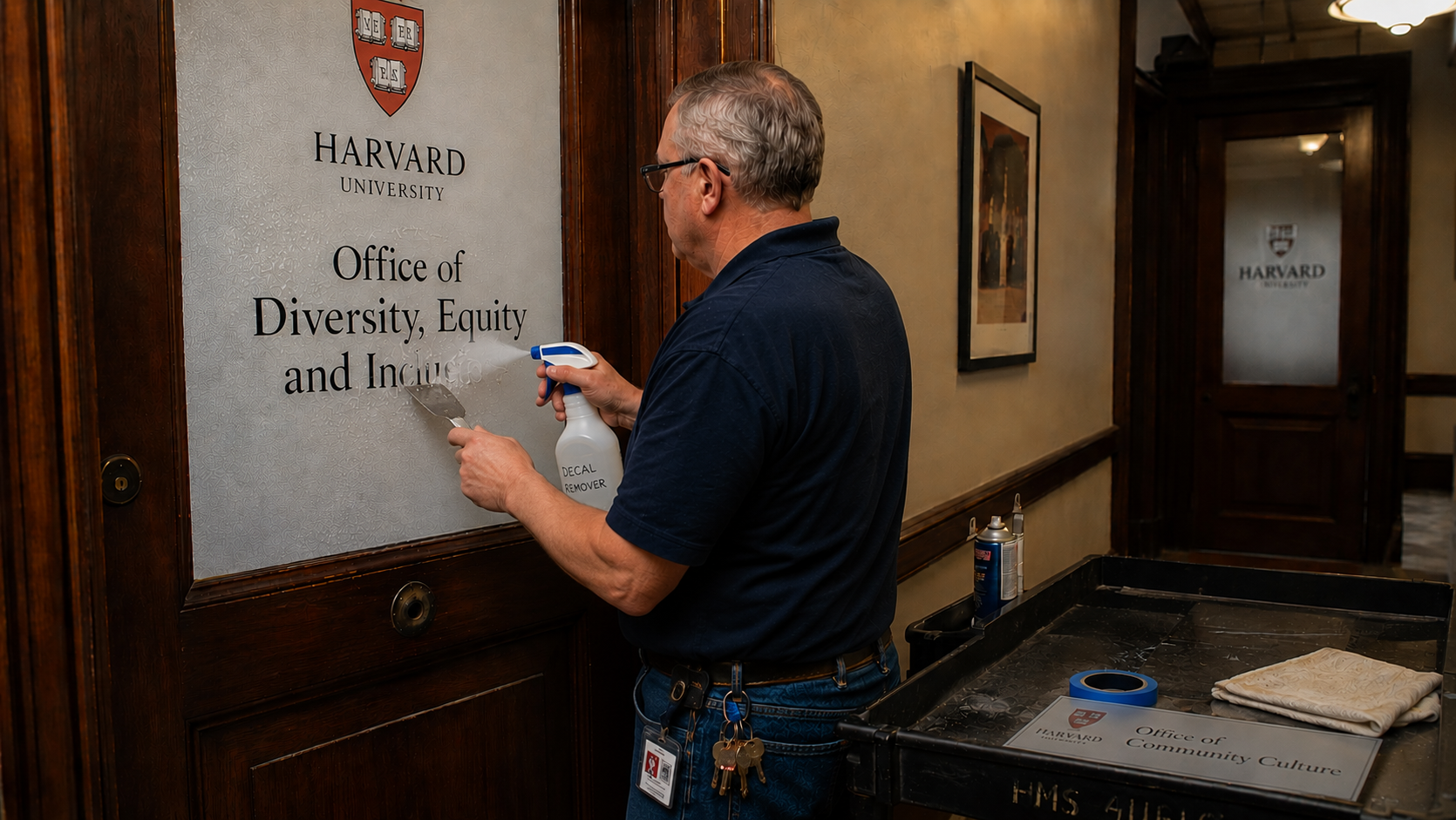
Harvard didn't dismantle DEI. It rebranded it — and quietly gave it more money. What looks like institutional surrender is something else entirely.
The algorithm processes you. God knows you.
One of those is a metric. The other is a covenant. Know which one you are living from — and carry the answer into the rooms where people are still searching for it.