The Crucible | He Translated It Anyway
Issue 42 | Thursday, May 28, 2026 | The Formation Forge
– 6 min read

Issue 42 | Thursday, May 28, 2026 | The Formation Forge
On Tuesday we asked the formation question underneath the Clive Johnston conviction: have you counted the cost of the Word before the moment of pressure arrives?
Today we go to a man who answered that question five hundred years ago — in exile, in hiding, hunted across Europe, with a death sentence over his head.
He kept translating.
Virtue: Counted Cost
William Tyndale was born in Gloucestershire, England, around 1494. He was a scholar by formation — Oxford, then Cambridge — fluent in eight languages, including Greek and Hebrew. By his late twenties he had arrived at a conviction that would define the rest of his life and end it violently: that the English people needed the Word of God in their own language, and that he was the man to give it to them.
The English Bible did not yet exist. The institutional church held the Scriptures in Latin, read by clergy, interpreted by hierarchy, inaccessible to the ordinary farmer, merchant, or tradesman. Tyndale believed this was not a practical problem to be managed. It was a spiritual emergency. He reportedly told a learned clergyman who dismissed his project: If God spare my life, ere many years I will cause a boy that driveth the plough to know more of the Scripture than thou dost.
That was not rhetoric. It was a commission. And Tyndale spent the rest of his life making it true at the cost of everything else.
In 1523, Tyndale sought permission from the Bishop of London to undertake a translation of the New Testament into English. The Bishop refused. The institutional church had no interest in an English Bible — and considerable interest in preventing one.
Tyndale understood the refusal clearly. There would be no official channel. No institutional support. No protection. He left England in 1524 and never returned.
From exile in Germany and the Low Countries, Tyndale began his translation work. In 1526, the first printed English New Testament — his translation, from the original Greek, not the Latin Vulgate — was smuggled into England in bales of cloth and bundles of merchandise. The Bishop of London bought up copies by the thousands to burn them. Tyndale used the money to print more.
The authorities hunted him across Europe for a decade. He moved constantly — Hamburg, Wittenberg, Antwerp — working, translating, writing. He completed the Pentateuch. He translated Jonah. He kept working on the Old Testament. He produced theological writings and polemical tracts. He did all of it with a price on his head, in cities that were not his home, depending on a network of sympathizers who were themselves at risk.
In 1535, he was betrayed. A man named Henry Phillips, who had posed as a friend, lured Tyndale into the street in Antwerp and handed him to imperial agents. He was arrested, imprisoned in Vilvoorde Castle outside Brussels, and held for sixteen months.
On October 6, 1536, William Tyndale was strangled at the stake and his body burned.
His last recorded words were a prayer: Lord, open the King of England's eyes.
Tyndale did not stumble into martyrdom. He walked toward it with open eyes.
He understood, from the moment the Bishop of London refused him in 1523, what the project would cost. He had watched Jan Hus burned at the Council of Constance over a century earlier — the same charge, the same machinery, the same institutional refusal to allow the Word to move freely among ordinary people. He knew what Luther was facing in Germany. He knew what happened to men who put Scripture into the hands of people the church had decided should not have it.
He translated anyway.
The conviction that drove Tyndale was not a theory about religious liberty. It was a theological certainty: that the Word of God, heard in the language a person actually speaks, is the means by which the Spirit works. That the ploughboy kneeling in a field deserved access to the same Scripture that the Bishop of London guarded in Latin. That no institution — however powerful, however ancient, however willing to use violence — had the authority to stand between the Word and the people it was meant for.
That conviction was already settled before the Bishop refused him. It was settled before he left England. It was settled in the prison at Vilvoorde, through sixteen months of captivity, all the way to the stake.
The arrest did not produce it. The execution did not extinguish it. It was there before either arrived.
Everything.
Tyndale gave up England — his home, his professional standing, his safety, his future. He gave up twelve years to exile and poverty and constant movement. He gave up relationships, security, comfort. He gave up his life.
None of that was an accident. None of it surprised him. He had counted it. He had decided, at some point between his conviction forming and his departure from England, that the Word was worth it. That the ploughboy needed the Scripture. That the cost of providing it was less than the cost of withholding it.
He did not decide that at the stake. He decided it at a desk in Gloucestershire, probably alone, probably long before anyone else knew what he was planning.
That is where the cost is always counted. Not in the moment of pressure. Before it.
Within a year of Tyndale's execution, King Henry VIII — the same king whose agents had hunted Tyndale across Europe — authorized the first official English Bible for use in every English church. The Matthew Bible of 1537 was approximately 80 percent Tyndale's own translation. By 1611, the King James Version had incorporated his language so thoroughly that scholars estimate 83 percent of the New Testament and 76 percent of the Old Testament in the KJV came from Tyndale's pen.
Every English-speaking believer who has ever read the Bible in their own language has read William Tyndale. Most of them do not know his name.
The ploughboy got the Scripture. It cost Tyndale everything. He knew it would. He counted it and said yes anyway.
Clive Johnston is not William Tyndale. A £450 fine is not a death sentence. A buffer zone outside a hospital in Northern Ireland is not the Inquisition.
But the formation question is the same question across five hundred years: has the conviction gotten into your bones before the moment of pressure arrives? Is the cost already counted? Is the decision already made?
Tyndale's answer was yes — settled at a desk in Gloucestershire, tested in sixteen months in a castle prison, confirmed at the stake with a prayer on his lips for the king who had ordered his death.
Johnston's answer was yes — settled before the officers arrived, confirmed with his hands cuffed behind his back, still preaching.
The formation question for the believer reading this Thursday morning is the same one it has always been. Not whether you believe the Word is worth it. Whether you have already decided.
Tyndale did not produce courage on demand in the moment of crisis. He produced it from a conviction that was already settled — years before the crisis arrived. The formed believer does not wait for the room to turn hostile before deciding how to respond. The decision is made at the desk, in the quiet, before anyone else is watching. That is where formation happens. That is where cost gets counted. Do it now.
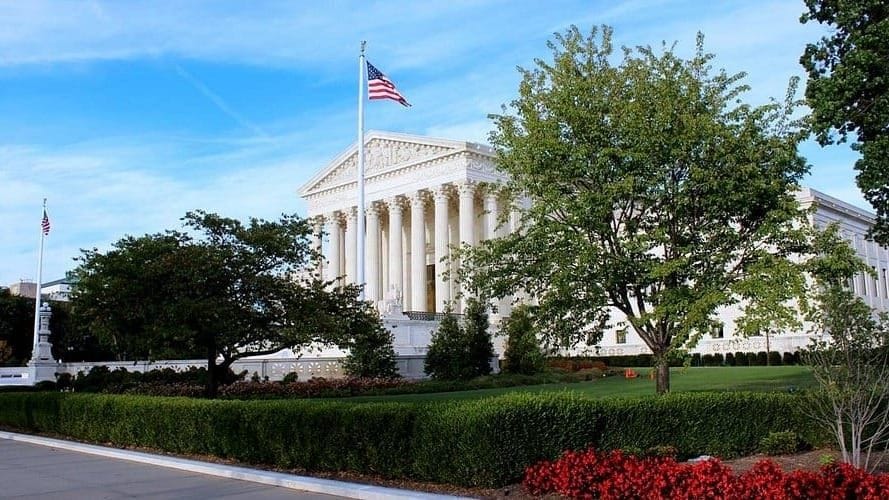
Yesterday's issue — Where Rights Come From — And Why the Answer Changes Everything — made the case that rights are endowed by a Creator, not granted by a government — pre-political, unalienable, beyond any institution's authority to revoke. Tyndale lived that argument before the Declaration named it. The Bishop of London had the institutional power. He did not have the authority. Tyndale knew the difference. That is the conviction the formed believer carries into every room.
Read it at theguardianscross.org.
William Tyndale: A Biography — David Daniell (1994). The definitive biography. Meticulous, readable, and genuinely moving. If you read one book about Tyndale, this is it.
God's Bestseller: William Tyndale, Thomas More and the Writing of the English Bible — Brian Moynahan (2002). Tyndale's story set against his adversary Thomas More — two men of equal conviction, opposite conclusions, and the English Bible caught between them.
The Obedience of a Christian Man — William Tyndale (1528, modern edition). Tyndale's own voice — his theological framework for why the Word must be free and accessible. Read the man himself.
Tyndale counted the cost at a desk in Gloucestershire. He counted it in exile. He counted it in prison. He counted it at the stake. At every point, the answer was the same: the Word is worth it.
His last prayer was for the king who had him killed. Not bitterness. Not recantation. A prayer — because the conviction had never been about the cost. It had been about the Word.
The ploughboy got the Scripture.
Count the cost. Carry the Word. Do not let go of either.
The Guardians' Cross is a Christian formation and cultural engagement ministry — equipping believers to carry their faith into every room and every arena. Learn more → theguardianscross.org